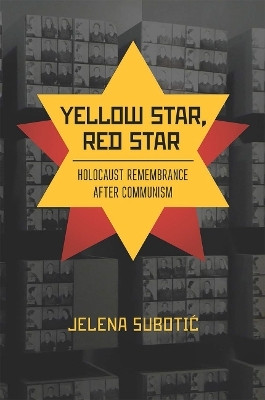
Yellow Star, Red Star(English, Hardcover, Subotic Jelena)
- Subotic Jelena
Paperback & Hardcover deals ―
Amazon IndiaGOFlipkart ₹ 2539SnapdealGOSapnaOnlineGOJain Book AgencyGOBooks Wagon₹407Book ChorGOCrosswordGODC BooksGOe-book & Audiobook deals ―
Amazon India GOGoogle Play Books GOAudible GO* Price may vary from time to time.
* GO = We're not able to fetch the price (please check manually visiting the website).
Know about the book -
Yellow Star, Red Star(English, Hardcover, Subotic Jelena) is written by Subotic Jelena and published by Cornell University Press. It's available with International Standard Book Number or ISBN identification 150174240X (ISBN 10) and 9781501742408 (ISBN 13).
Yellow Star, Red Star asks why Holocaust memory continues to be so deeply troubled-ignored, appropriated, and obfuscated-throughout Eastern Europe, even though it was in those lands that most of the extermination campaign occurred. As part of accession to the European Union, Jelena Subotic shows, East European states were required to adopt, participate in, and contribute to the established Western narrative of the Holocaust. This requirement created anxiety and resentment in post-communist states: Holocaust memory replaced communist terror as the dominant narrative in Eastern Europe, focusing instead on predominantly Jewish suffering in World War II. Influencing the European Union's own memory politics and legislation in the process, post-communist states have attempted to reconcile these two memories by pursuing new strategies of Holocaust remembrance. The memory, symbols, and imagery of the Holocaust have been appropriated to represent crimes of communism. Yellow Star, Red Star presents in-depth accounts of Holocaust remembrance practices in Serbia, Croatia, and Lithuania, and extends the discussion to other East European states. The book demonstrates how countries of the region used Holocaust remembrance as a political strategy to resolve their contemporary "ontological insecurities"-insecurities about their identities, about their international status, and about their relationships with other international actors. As Subotic concludes, Holocaust memory in Eastern Europe has never been about the Holocaust or about the desire to remember the past, whether during communism or in its aftermath. Rather, it has been about managing national identities in a precarious and uncertain world.
