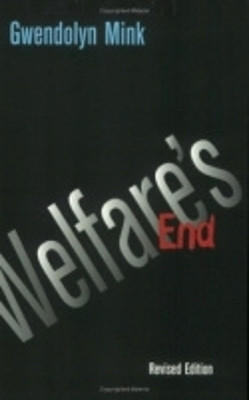
Welfare's End(English, Electronic book text, Mink Gwendolyn)
- Mink Gwendolyn
Paperback & Hardcover deals ―
Amazon IndiaGOFlipkart ₹ 3439SnapdealGOSapnaOnlineGOJain Book AgencyGOBooks Wagon₹269Book ChorGOCrosswordGODC BooksGOe-book & Audiobook deals ―
Amazon India GOGoogle Play Books GOAudible GO* Price may vary from time to time.
* GO = We're not able to fetch the price (please check manually visiting the website).
Know about the book -
Welfare's End(English, Electronic book text, Mink Gwendolyn) is written by Mink Gwendolyn and published by Cornell University Press. It's available with International Standard Book Number or ISBN identification 1501728873 (ISBN 10) and 9781501728877 (ISBN 13).
With her analysis of the thirty-year campaign to reform and ultimately to end welfare, Gwendolyn Mink levels a searing indictment of anti-welfare politicians'assault on poor mothers. She charges that the basic elements of the new welfare policy subordinate poor single mothers in a separate system of law. Mink points to the racial, class, and gender biases of both liberals and conservatives to explain the odd but sturdy consensus behind welfare reforms that force the poor single mother to relinquish basic rights and compel her to find economic security in work outside the home. Mink explores how and why we should cure the unique inequality of poor single mothers by reorienting the emphasis of welfare policy away from regulating mothers to rewarding the work they do. Every mother is a working mother, the bumper sticker proclaims, but the work mothers do pays no wages. Mink argues that women's equality depends on economic support for caregivers'work. Welfare's End challenges the ways in which policymakers define the problem they seek to cure. While legislators assume that something is wrong with poor single mothers, Mink insists that something is wrong with a system that invades their rights and negates their work. Showing how welfare reform harms women, Mink invites the design of policies to promote gender justice.
