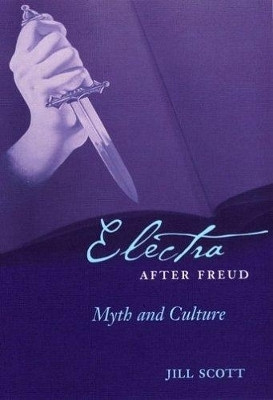
Electra After Freud(English, Electronic book text, Scott Jill)
- Scott Jill
Paperback & Hardcover deals ―
Amazon IndiaGOFlipkart ₹ 2612SnapdealGOSapnaOnlineGOJain Book AgencyGOBooks Wagon₹413Book ChorGOCrosswordGODC BooksGOe-book & Audiobook deals ―
Amazon India GOGoogle Play Books GOAudible GO* Price may vary from time to time.
* GO = We're not able to fetch the price (please check manually visiting the website).
Know about the book -
Electra After Freud(English, Electronic book text, Scott Jill) is written by Scott Jill and published by Cornell University Press. It's available with International Standard Book Number or ISBN identification 1501718320 (ISBN 10) and 9781501718328 (ISBN 13).
"Electra's story is essentially a tale of murder, revenge, and violence. In the ancient myth of Atreus, Agamemnon returns home from battle and receives no hero's welcome. Instead, he is greeted with an ax, murdered in his bath by his wife, Clytemnestra, and her lover-accomplice, Aegisthus. Electra chooses anger over sorrow and stops at nothing to ensure that her mother pays. In revenge, Electra, with the help of her brother, orchestrates a brutal and bloody matricide, and her reward is the restitution of her father's good name. Amid all this chaos, Electra, Agamemnon's princess daughter, must bear the humiliation of being treated as a slave girl and labeled a madwoman."-from the IntroductionAlmost everyone knows about Oedipus and his mother, and many readers would put the Oedipus myth at the forefront of Western collective mythology. In Electra after Freud, Jill Scott leaves that couple behind and argues convincingly for the primacy of the countermyth of Agamemnon and his daughter. Through a lens of Freudian and feminist psychoanalysis, this book views renderings of the Electra myth in twentieth-century literature and culture.Scott reads several pivotal texts featuring Electra to demonstrate what she calls "a narrative revolt" against the dominance of Oedipus as archetype. Situating the Electra myth within a framework of psychoanalysis, medicine, opera, and dance, Scott investigates the heroine's role at the intersections of history and the feminine, eros and thanatos, hysteria and melancholia. Scott analyzes Electra adaptations by H.D., Hofmannsthal and Strauss, Musil, and Plath and highlights key moments in the telling and reception of the Electra myth in the modern imagination.
