AngloModern(English, Electronic book text, Wolff Janet)
- Wolff Janet
Paperback & Hardcover deals ―
Amazon IndiaGOFlipkart ₹ 3229SnapdealGOSapnaOnlineGOJain Book AgencyGOBooks Wagon₹868Book ChorGOCrosswordGODC BooksGOe-book & Audiobook deals ―
Amazon India GOGoogle Play Books GOAudible GO* Price may vary from time to time.
* GO = We're not able to fetch the price (please check manually visiting the website).
Know about the book -
AngloModern(English, Electronic book text, Wolff Janet) is written by Wolff Janet and published by Cornell University Press. It's available with International Standard Book Number or ISBN identification 1501717464 (ISBN 10) and 9781501717468 (ISBN 13).
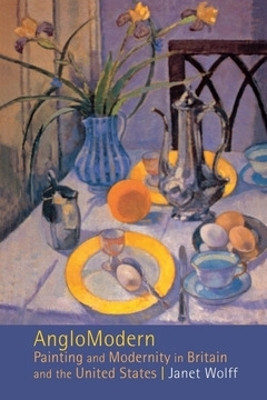
Early twentieth-century art and art practice in Britain and the United States were, Janet Wolff asserts, marginalized by critics and historians in very similar ways after the rise of post-Cubist modern art. In a masterly book on the sociology of modernism, Wolff explores work that was primarily realist and figurative and investigates the social, institutional, political, and aesthetic processes by which that art fell by the wayside in the postwar period. Throughout, she shows that questions of gender and ethnicity play an important role in critical, curatorial, and historical evaluations. For example, Wolff finds that the work of the artists central to the development of the Whitney Museum was relegated to a secondary status in the postwar period, when realism was labeled "feminine" in contrast to the aggressive masculinity of abstract expressionism.The three key periods considered in AngloModern are the early twentieth century, when modernist art and existing and new realist traditions coexisted in a certain tension; the postwar period, in which modernism claimed superiority over realism; and the late twentieth century, when a retrieval of the realist and figurative traditions seemed to occur. Wolff concludes by considering this re-emergence, as well as the limitations of earlier discussions of the struggles of realist and figurative art to endure the currents of modernism.
