Hesitant Heroes(English, Electronic book text, Ziolkowski Theodore)
- Ziolkowski Theodore
Paperback & Hardcover deals ―
Amazon IndiaGOFlipkart ₹ 3799SnapdealGOSapnaOnlineGOJain Book AgencyGOBooks Wagon₹8,967Book ChorGOCrosswordGODC BooksGOe-book & Audiobook deals ―
Amazon India GOGoogle Play Books GOAudible GO* Price may vary from time to time.
* GO = We're not able to fetch the price (please check manually visiting the website).
Know about the book -
Hesitant Heroes(English, Electronic book text, Ziolkowski Theodore) is written by Ziolkowski Theodore and published by Cornell University Press. It's available with International Standard Book Number or ISBN identification 150171127X (ISBN 10) and 9781501711275 (ISBN 13).
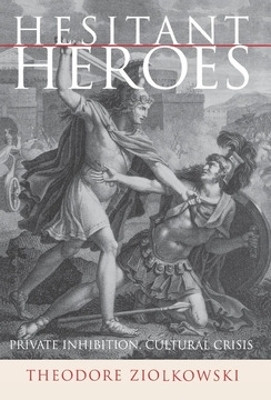
Why, Theodore Ziolkowski wonders, does Western literature abound with figures who experience a crucial moment of uncertainty in their actions? In this highly original and engaging work, he explores the significance of these unlikely heroes for literature and history.From Aeneas-who wavered momentarily before plunging his sword into Turnus's chest-to Hamlet, Orestes, Parzival, Wallenstein, and others, including Kafka's Josef K., Ziolkowski demonstrates that characters' private uncertainty reveals a classic opposition of binary forces. He describes how Aeneas, for example, was forced to choose between the ancient code of blood vengeance and the new civic virtues of law and justice. Ziolkowski asserts that the indecision of the characters reflects the tensions that authors observed in their own societies. Drawing on the insights of Hegel and Freud, he analyzes the ways in which these tensions represent turning points in cultural history. In stark contrast to Aeneas, Josef K. temporized for a year before his executioners thrust a knife into his heart. For Ziolkowski, the centuries separating Virgil and Kafka are ones in which the notion of the hero was transformed almost to the point of total inversion. He sheds light on this transformation and a corresponding change in literary form.
