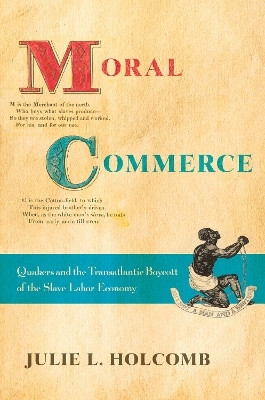
Moral Commerce(English, Electronic book text, Holcomb Julie L.)
- Holcomb Julie L.
Paperback & Hardcover deals ―
Amazon IndiaGOFlipkart ₹ 3067SnapdealGOSapnaOnlineGOJain Book AgencyGOBooks Wagon₹274Book ChorGOCrosswordGODC BooksGOe-book & Audiobook deals ―
Amazon India GOGoogle Play Books GOAudible GO* Price may vary from time to time.
* GO = We're not able to fetch the price (please check manually visiting the website).
Know about the book -
Moral Commerce(English, Electronic book text, Holcomb Julie L.) is written by Holcomb Julie L. and published by Cornell University Press. It's available with International Standard Book Number or ISBN identification 1501706071 (ISBN 10) and 9781501706073 (ISBN 13).
How can the simple choice of a men's suit be a moral statement and a political act? When the suit is made of free-labor wool rather than slave-grown cotton. In Moral Commerce, Julie L. Holcomb traces the genealogy of the boycott of slave labor from its seventeenth-century Quaker origins through its late nineteenth-century decline. In their failures and in their successes, in their resilience and their persistence, antislavery consumers help us understand the possibilities and the limitations of moral commerce. Quaker antislavery rhetoric began with protests against the slave trade before expanding to include boycotts of the use and products of slave labor. For more than one hundred years, British and American abolitionists highlighted consumers' complicity in sustaining slavery. The boycott of slave labor was the first consumer movement to transcend the boundaries of nation, gender, and race in an effort by reformers to change the conditions of production. The movement attracted a broad cross-section of abolitionists: conservative and radical, Quaker and non-Quaker, male and female, white and black. The men and women who boycotted slave labor created diverse, biracial networks that worked to reorganize the transatlantic economy on an ethical basis. Even when they acted locally, supporters embraced a global vision, mobilizing the boycott as a powerful force that could transform the marketplace. For supporters of the boycott, the abolition of slavery was a step toward a broader goal of a just and humane economy. The boycott failed to overcome the power structures that kept slave labor in place; nonetheless, the movement's historic successes and failures have important implications for modern consumers.
