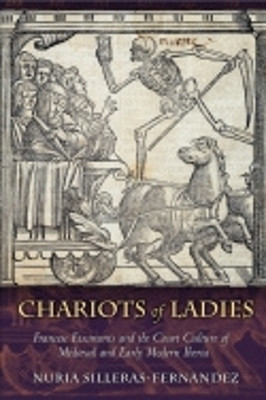
Chariots of Ladies(English, Electronic book text, Silleras-Fernandez Nuria)
- Silleras-Fernandez Nuria
Paperback & Hardcover deals ―
Amazon IndiaGOFlipkart ₹ 2655SnapdealGOSapnaOnlineGOJain Book AgencyGOBooks Wagon₹927Book ChorGOCrosswordGODC BooksGOe-book & Audiobook deals ―
Amazon India GOGoogle Play Books GOAudible GO* Price may vary from time to time.
* GO = We're not able to fetch the price (please check manually visiting the website).
Know about the book -
Chariots of Ladies(English, Electronic book text, Silleras-Fernandez Nuria) is written by Silleras-Fernandez Nuria and published by Cornell University Press. It's available with International Standard Book Number or ISBN identification 1501701649 (ISBN 10) and 9781501701641 (ISBN 13).
In Chariots of Ladies, Nuria Silleras-Fernandez traces the development of devotion and female piety among the Iberian aristocracy from the late Middle Ages into the Golden Age, and from Catalonia to the rest of Iberia and Europe via the rise of the Franciscan Observant movement. A program of piety and morality devised by Francesc Eiximenis, a Franciscan theologian, royal counselor, and writer in Catalonia in the 1390s, came to characterize the feminine ideal in the highest circles of the Iberian aristocracy in the era of the Empire. As Eiximenis's work was adapted and translated into Castilian over the century and a half that followed, it became a model of devotion and conduct for queens and princesses, including Isabel the Catholic and her descendants, who ruled over Portugal and the Spanish Empire of the Hapsburgs. Silleras-Fernandez uses archival documentation, letters, manuscripts, incunabula, and a wide range of published material to clarify how Eiximenis's ideas on gender and devotion were read by Countess Sanxa Ximenis d'Arenos and Queen Maria de Luna of Aragon and how they were then changed by his adaptors and translators in Castile for new readers (including Isabel the Catholic and Juana the Mad), and in sixteenth-century Portugal for new patronesses (Juana's daughter, Catalina of Habsburg, and Catalina's daughter, Maria Manuela, first wife of Philip II). Chariots of Ladies casts light on a neglected dimension of encounter and exchange in Iberia from the late fourteenth to the mid-sixteenth centuries.
