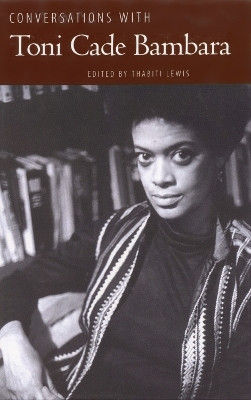
Conversations with Toni Cade Bambara(English, Paperback, unknown)
- unknown
Paperback & Hardcover deals ―
Amazon IndiaGOFlipkart ₹ 2548SnapdealGOSapnaOnlineGOJain Book AgencyGOBooks Wagon₹599Book ChorGOCrosswordGODC BooksGOe-book & Audiobook deals ―
Amazon India GOGoogle Play Books GOAudible GO* Price may vary from time to time.
* GO = We're not able to fetch the price (please check manually visiting the website).
Know about the book -
Conversations with Toni Cade Bambara(English, Paperback, unknown) is written by unknown and published by University Press of Mississippi. It's available with International Standard Book Number or ISBN identification 1496813073 (ISBN 10) and 9781496813077 (ISBN 13).
Conversations with Toni Cade Bambara reveals an artist and activist whose work deftly negotiates boundaries of feminism, nationalism, and film. The intimacy of these collaborations or conversations between Bambara (1939-1995) and her interviewers provides an excellent and necessary resource for those interested in scholarly approaches to her fiction, especially her novels The Salt Eaters and the posthumously published Those Bones Are Not My Child, and her acclaimed short story collection Gorilla, My Love. The collection reveals the passion, humor, and real-life experiences of the woman who through her editing of the groundbreaking anthology of black women's writing The Black Woman and contributions to the documentary W. E. B. Du Bois: A Biography in Four Voices changed perceptions of African American culture in the modern era. The interviews present a woman who saw herself as "a teacher who writes, a social worker who writes, a youth worker who writes, a mother who writes." Bambara viewed herself as a cultural worker for oppressed people whose job as an artist was making, in her words, "revolution irresistible." Indeed, her fiction champions the working class and "average folk," both of whom she felt were made invisible by mainstream American society. The volume also displays Bambara's passionate criticism of radicalism and revolutionary philosophies that were structured by patriarchal, sexist, and heterosexual-centric paradigms. Her willingness to challenge her own ideals, as well as those that conflicted with them, marks her as one of the most forceful black writers of her era.
