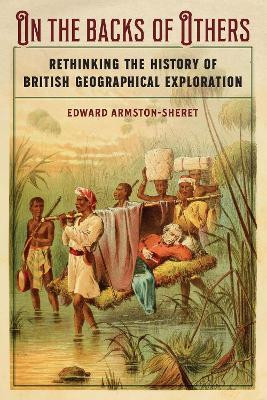
On the Backs of Others(English, Hardcover, Armston-Sheret Edward)
- Armston-Sheret Edward
Paperback & Hardcover deals ―
Amazon IndiaGOFlipkart ₹ 6963SnapdealGOSapnaOnlineGOJain Book AgencyGOBooks Wagon₹303Book ChorGOCrosswordGODC BooksGOe-book & Audiobook deals ―
Amazon India GOGoogle Play Books GOAudible GO* Price may vary from time to time.
* GO = We're not able to fetch the price (please check manually visiting the website).
Know about the book -
On the Backs of Others(English, Hardcover, Armston-Sheret Edward) is written by Armston-Sheret Edward and published by University of Nebraska Press. It's available with International Standard Book Number or ISBN identification 1496230973 (ISBN 10) and 9781496230973 (ISBN 13).
In the Victorian and Edwardian eras British explorers sought to become respected geographers and popular public figures, downplaying or reframing their reliance on others for survival. Far from being solitary heroes, these explorers were in reality dependent on the bodies, senses, curiosity, and labor of subaltern people and animals. In On the Backs of Others Edward Armston-Sheret offers new perspectives on British exploration in this era by focusing on the contributions of the people and animals, ordinarily written out of the mainstream histories, who made these journeys possible. He explores several well-known case studies of enduring popular and academic interest, such as Richard Francis Burton and John Hanning Speke's Nile expeditions (1856-59 and 1860-63); Isabella Bird's travels in North America, Persia, and East Asia (1872-c. 1900); and Captain Robert Falcon Scott's two Antarctic expeditions (1901-4 and 1911-13). Armston-Sheret argues that numerous previously ignored stories show the work and agency of subaltern groups. In rethinking the history of exploration On the Backs of Others offers the first book-length study of the relationship between exploration and empire and their legacies within academic geography.
