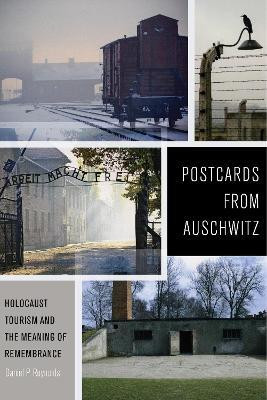
Postcards from Auschwitz(English, Hardcover, Reynolds Daniel P.)
- Reynolds Daniel P.
Paperback & Hardcover deals ―
Amazon IndiaGOFlipkart ₹ 9522SnapdealGOSapnaOnlineGOJain Book AgencyGOBooks Wagon₹1,584Book ChorGOCrosswordGODC BooksGOe-book & Audiobook deals ―
Amazon India GOGoogle Play Books GOAudible GO* Price may vary from time to time.
* GO = We're not able to fetch the price (please check manually visiting the website).
Know about the book -
Postcards from Auschwitz(English, Hardcover, Reynolds Daniel P.) is written by Reynolds Daniel P. and published by New York University Press. It's available with International Standard Book Number or ISBN identification 1479860433 (ISBN 10) and 9781479860432 (ISBN 13).
The uneasy link between tourism and collective memory at Holocaust museums and memorials Each year, millions of people visit Holocaust memorials and museums, with the number of tourists steadily on the rise. What lies behind the phenomenon of "Holocaust tourism" and what role do its participants play in shaping how we remember and think about the Holocaust? In Postcards from Auschwitz, Daniel P. Reynolds argues that tourism to former concentration camps, ghettos, and other places associated with the Nazi genocide of European Jewry has become an increasingly vital component in the evolving collective remembrance of the Holocaust. Responding to the tendency to dismiss tourism as commercial, superficial, or voyeuristic, Reynolds insists that we take a closer look at a phenomenon that has global reach, takes many forms, and serves many interests. The book focuses on some of the most prominent sites of mass murder in Europe, and then expands outward to more recent memorial museums. Reynolds provides a historically-informed account of the different forces that have shaped Holocaust tourism since 1945, including Cold War politics, the sudden emergence of the "memory boom" beginning in the 1980s, and the awareness that eyewitnesses to the Holocaust are passing away. Based on his on-site explorations, the contributions from researchers in Holocaust studies and tourism studies, and the observations of tourists themselves, this book reveals how tourism is an important part of efforts to understand and remember the Holocaust, an event that continues to challenge ideals about humanity and our capacity to learn from the past.
