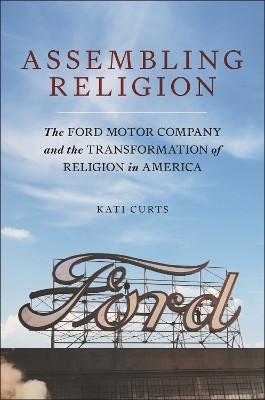
Assembling Religion(English, Hardcover, Curts Kati)
- Curts Kati
Paperback & Hardcover deals ―
Amazon IndiaGOFlipkart ₹ 3867SnapdealGOSapnaOnlineGOJain Book AgencyGOBooks Wagon₹1,764Book ChorGOCrosswordGODC BooksGOe-book & Audiobook deals ―
Amazon India GOGoogle Play Books GOAudible GO* Price may vary from time to time.
* GO = We're not able to fetch the price (please check manually visiting the website).
Know about the book -
Assembling Religion(English, Hardcover, Curts Kati) is written by Curts Kati and published by New York University Press. It's available with International Standard Book Number or ISBN identification 1479831581 (ISBN 10) and 9781479831586 (ISBN 13).
How Henry Ford institutionalized a social gospel Henry Ford did not just mass produce cars. As a member of the Episcopal Church, reader of New Thought texts, believer in the "gospel of reincarnation," mass marketer of antisemitic material, and employer who institutionalized a social gospel, Henry Ford's contributions to American models of business were informed by and produced for an America he understood to be broadly Christian. Though Ford's efforts at the head of the Ford Motor Company have commonly been understood as secular, Ford himself was explicit that his work in engineering and auto production was prophetic and meant to remake the world. This religious history of Henry Ford and the Ford Motor Company repositions them within critical studies of religion, examining how Ford transformed American religious practice in the twentieth century. Drawing directly on documents from Ford's archive, it examines Ford's mass production methods and bureaucratic reforms as examples of prosperity gospel traditions, illuminating the ways manufacturing and technology intersect with American religious practice. Bridging American religious and industrial history, Assembling Religion offers a new and surprising way to understand Ford's impact on culture, commerce, and the technology of labor.
