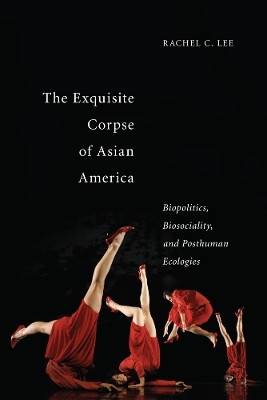
The Exquisite Corpse of Asian America(English, Paperback, Lee Rachel C.)
- Lee Rachel C.
Paperback & Hardcover deals ―
Amazon IndiaGOFlipkart ₹ 3771SnapdealGOSapnaOnlineGOJain Book AgencyGOBooks Wagon₹1,356Book ChorGOCrosswordGODC BooksGOe-book & Audiobook deals ―
Amazon India GOGoogle Play Books GOAudible GO* Price may vary from time to time.
* GO = We're not able to fetch the price (please check manually visiting the website).
Know about the book -
The Exquisite Corpse of Asian America(English, Paperback, Lee Rachel C.) is written by Lee Rachel C. and published by New York University Press. It's available with International Standard Book Number or ISBN identification 1479809780 (ISBN 10) and 9781479809783 (ISBN 13).
Winner of the 2016 Association for Asian American Studies Award for Best Book in Cultural Studies The Exquisite Corpse of Asian America addresses this central question: if race has been settled as a legal or social construction and not as biological fact, why do Asian American artists, authors, and performers continue to scrutinize their body parts? Engaging novels, poetry, theater, and new media from both the U.S. and internationally-such as Kazuo Ishiguro's science fiction novel Never Let Me Go or Ruth Ozeki's My Year of Meats and exhibits like that of Body Worlds in which many of the bodies on display originated from Chinese prisons-Rachel C. Lee teases out the preoccupation with human fragments and posthuman ecologies in the context of Asian American cultural production and theory. She unpacks how the designation of "Asian American" itself is a mental construct that is paradoxically linked to the biological body. Through chapters that each use a body part as springboard for reading Asian American texts, Lee inaugurates a new avenue of research on biosociality and biopolitics within Asian American criticism, focused on the literary and cultural understandings of pastoral governmentality, the divergent scales of embodiment, and the queer (cross)species being of racial subjects. She establishes an intellectual alliance and methodological synergy between Asian American studies and Science and Technology Studies (STS), biocultures, medical humanities, and femiqueer approaches to family formation, carework, affect, and ethics. In pursuing an Asian Americanist critique concerned with speculative and real changes to human biologies, she both produces innovation within the field and demonstrates the urgency of that critique to other disciplines.
