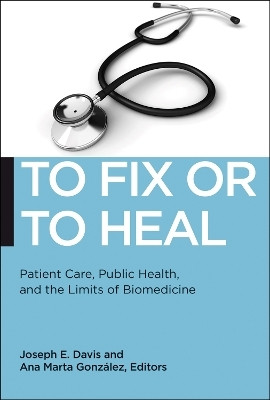
To Fix or to Heal(English, Paperback, unknown)
- unknown
Paperback & Hardcover deals ―
Amazon IndiaGOFlipkart ₹ 3418SnapdealGOSapnaOnlineGOJain Book AgencyGOBooks Wagon₹303Book ChorGOCrosswordGODC BooksGOe-book & Audiobook deals ―
Amazon India GOGoogle Play Books GOAudible GO* Price may vary from time to time.
* GO = We're not able to fetch the price (please check manually visiting the website).
Know about the book -
To Fix or to Heal(English, Paperback, unknown) is written by unknown and published by New York University Press. It's available with International Standard Book Number or ISBN identification 1479809586 (ISBN 10) and 9781479809585 (ISBN 13).
Do doctors fix patients? Or do they heal them? For all of modern medicine's many successes, discontent with the quality of patient care has combined with a host of new developments, from aging populations to the resurgence of infectious diseases, which challenge medicine's overreliance on narrowly mechanistic and technical methods of explanation and intervention, or "fixing' patients. The need for a better balance, for more humane "healing" rationales and practices that attend to the social and environmental aspects of health and illness and the experiencing person, is more urgent than ever. Yet, in public health and bioethics, the fields best positioned to offer countervailing values and orientations, the dominant approaches largely extend and reinforce the reductionism and individualism of biomedicine. The collected essays in To Fix or To Heal do more than document the persistence of reductionist approaches and the attendant extension of medicalization to more and more aspects of our lives. The contributors also shed valuable light on why reductionism has persisted and why more holistic models, incorporating social and environmental factors, have gained so little traction. The contributors examine the moral appeal of reductionism, the larger rationalist dream of technological mastery, the growing valuation of health, and the enshrining of individual responsibility as the seemingly non-coercive means of intervention and control. This paradigm-challenging volume advances new lines of criticism of our dominant medical regime, even while proposing ways of bringing medical practice, bioethics, and public health more closely into line with their original goals. Precisely because of the centrality of the biomedical approach to our society, the contributors argue, challenging the reductionist model and its ever-widening effects is perhaps the best way to press for a much-needed renewal of our ethical and political discourse.
