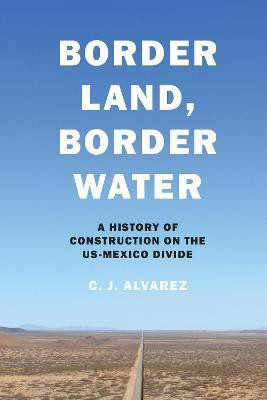
Border Land, Border Water(English, Paperback, Alvarez C. J.)
- Alvarez C. J.
Paperback & Hardcover deals ―
Amazon IndiaGOFlipkart ₹ 3201SnapdealGOSapnaOnlineGOJain Book AgencyGOBooks Wagon₹489Book ChorGOCrosswordGODC BooksGOe-book & Audiobook deals ―
Amazon India GOGoogle Play Books GOAudible GO* Price may vary from time to time.
* GO = We're not able to fetch the price (please check manually visiting the website).
Know about the book -
Border Land, Border Water(English, Paperback, Alvarez C. J.) is written by Alvarez C. J. and published by University of Texas Press. It's available with International Standard Book Number or ISBN identification 1477319018 (ISBN 10) and 9781477319017 (ISBN 13).
Winner, Abbott Lowell Cummings Award, Vernacular Architecture Forum, 2020 Winner, Elisabeth Blair MacDougall Book Award, Society of Architectural Historians, 2021 From the boundary surveys of the 1850s to the ever-expanding fences and highway networks of the twenty-first century, Border Land, Border Water examines the history of the construction projects that have shaped the region where the United States and Mexico meet. Tracing the accretion of ports of entry, boundary markers, transportation networks, fences and barriers, surveillance infrastructure, and dams and other river engineering projects, C. J. Alvarez advances a broad chronological narrative that captures the full life cycle of border building. He explains how initial groundbreaking in the nineteenth century transitioned to unbridled faith in the capacity to control the movement of people, goods, and water through the use of physical structures. By the 1960s, however, the built environment of the border began to display increasingly obvious systemic flaws. More often than not, Alvarez shows, federal agencies in both countries responded with more construction-"compensatory building" designed to mitigate unsustainable policies relating to immigration, black markets, and the natural world. Border Land, Border Water reframes our understanding of how the border has come to look and function as it does and is essential to current debates about the future of the US-Mexico divide.
