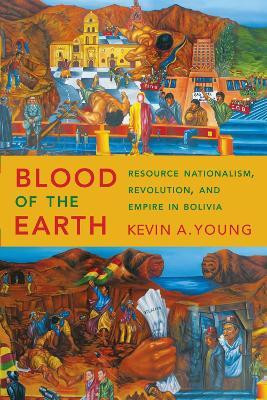
Blood of the Earth(English, Paperback, Young Kevin A.)
- Young Kevin A.
Paperback & Hardcover deals ―
Amazon IndiaGOFlipkart ₹ 2520SnapdealGOSapnaOnlineGOJain Book AgencyGOBooks Wagon₹495Book ChorGOCrosswordGODC BooksGOe-book & Audiobook deals ―
Amazon India GOGoogle Play Books GOAudible GO* Price may vary from time to time.
* GO = We're not able to fetch the price (please check manually visiting the website).
Know about the book -
Blood of the Earth(English, Paperback, Young Kevin A.) is written by Young Kevin A. and published by University of Texas Press. It's available with International Standard Book Number or ISBN identification 1477311653 (ISBN 10) and 9781477311653 (ISBN 13).
Conflicts over subterranean resources, particularly tin, oil, and natural gas, have driven Bolivian politics for nearly a century. "Resource nationalism"-the conviction that resource wealth should be used for the benefit of the "nation"-has often united otherwise disparate groups, including mineworkers, urban workers, students, war veterans, and middle-class professionals, and propelled an indigenous union leader, Evo Morales, into the presidency in 2006. Blood of the Earth reexamines the Bolivian mobilization around resource nationalism that began in the 1920s, crystallized with the 1952 revolution, and continues into the twenty-first century. Drawing on a wide array of Bolivian and US sources, Kevin A. Young reveals that Bolivia became a key site in a global battle among economic models, with grassroots coalitions demanding nationalist and egalitarian alternatives to market capitalism. While US-supported moderates within the revolutionary regime were able to defeat more radical forces, Young shows how the political culture of resource nationalism, though often comprising contradictory elements, constrained government actions and galvanized mobilizations against neoliberalism in later decades. His transnational and multilevel approach to the 1952 revolution illuminates the struggles among Bolivian popular sectors, government officials, and foreign powers, as well as the competing currents and visions within Bolivia's popular political cultures. Offering a fresh appraisal of the Bolivian Revolution, resource nationalism, and the Cold War in Latin America, Blood of the Earth is an ideal case study for understanding the challenges shared by countries across the Global South.
