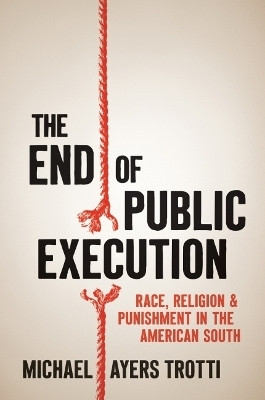
The End of Public Execution(English, Paperback, Trotti Michael Ayers)
- Trotti Michael Ayers
Paperback & Hardcover deals ―
Amazon IndiaGOFlipkart ₹ 4115SnapdealGOSapnaOnlineGOJain Book AgencyGOBooks Wagon₹413Book ChorGOCrosswordGODC BooksGOe-book & Audiobook deals ―
Amazon India GOGoogle Play Books GOAudible GO* Price may vary from time to time.
* GO = We're not able to fetch the price (please check manually visiting the website).
Know about the book -
The End of Public Execution(English, Paperback, Trotti Michael Ayers) is written by Trotti Michael Ayers and published by The University of North Carolina Press. It's available with International Standard Book Number or ISBN identification 1469670410 (ISBN 10) and 9781469670416 (ISBN 13).
Before 1850, all legal executions in the South were performed before crowds that could number in the thousands; the last legal public execution was in 1936. This study focuses on the shift from public executions to ones behind barriers, situating that change within our understandings of lynching and competing visions of justice and religion. Intended to shame and intimidate, public executions after the Civil War had quite a different effect on southern Black communities. Crowds typically consisting of as many Black people as white behaved like congregations before a macabre pulpit, led in prayer and song by a Black minister on the scaffold. Black criminals often proclaimed their innocence and almost always their salvation. This turned the proceedings into public, mixed-race and mixed-gender celebrations of Black religious authority and devotion. In response, southern states rewrote their laws to eliminate these crowds and this Black authority, ultimately turning to electrocutions in the bowels of state penitentiaries. In just the same era when a wave of lynchings crested around the turn of the twentieth century, states transformed the ways that the South's white-dominated governments controlled legal capital punishment, making executions into private affairs witnessed only by white people.
