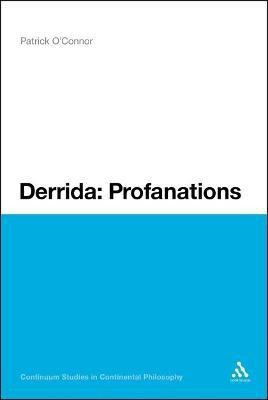
Derrida: Profanations(English, Electronic book text, O'Connor Patrick Dr)
- O'Connor Patrick Dr
Paperback & Hardcover deals ―
Amazon IndiaGOFlipkart ₹ 3605SnapdealGOSapnaOnlineGOJain Book AgencyGOBooks WagonGOBook ChorGOCrosswordGODC BooksGOe-book & Audiobook deals ―
Amazon India GOGoogle Play Books ₹36.93Audible GO* Price may vary from time to time.
* GO = We're not able to fetch the price (please check manually visiting the website).
Know about the book -
Derrida: Profanations(English, Electronic book text, O'Connor Patrick Dr) is written by O'Connor Patrick Dr and published by Continuum Publishing Corporation. It's available with International Standard Book Number or ISBN identification 1441124330 (ISBN 10) and 9781441124333 (ISBN 13).
Derrida: Profanations presents a re-appraisal of Jacques Derrida's deconstruction. If philosophy articulates what it means to be human, then deconstruction, which Patrick O'Connor argues consigns all existence to a mortal, profane and worldly life remains radically philosophical. The assertion demands an analysis of Derrida's radicalisation of the key philosophers who influenced him, as well as a rebuttal of theological accounts of deconstruction. This book closely examines how the phenomenological lineage is received in deconstruction, especially the relation between deconstruction and Derrida's radical readings of Hegel, Husserl, Levinas and Heidegger.This book presents a theorisation of deconstruction as profane, atheistic and egalitarian. It reveals how deconstruction holds the resources to think ontology as a multiplicity of worlds through demonstrates the ways in which Derrida expresses a 'phenomenology' which disjoints humans' orientation to the world. Deconstruction is characterized as radically hubristic. For deconstruction, nothing is sacred. If nothing sustains itself as separate, exclusive or sacrosanct, then nothing can sustain the implementation of its own hierarchy.
