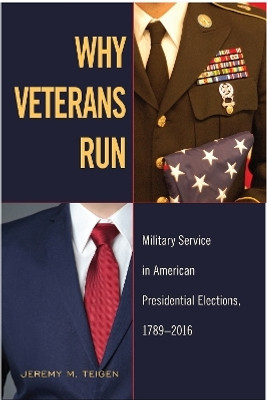
Why Veterans Run(English, Paperback, Teigen Jeremy M.)
- Teigen Jeremy M.
Paperback & Hardcover deals ―
Amazon IndiaGOFlipkart ₹ 3642SnapdealGOSapnaOnlineGOJain Book AgencyGOBooks Wagon₹567Book ChorGOCrosswordGODC BooksGOe-book & Audiobook deals ―
Amazon India GOGoogle Play Books ₹19.22Audible GO* Price may vary from time to time.
* GO = We're not able to fetch the price (please check manually visiting the website).
Know about the book -
Why Veterans Run(English, Paperback, Teigen Jeremy M.) is written by Teigen Jeremy M. and published by Temple University Press,U.S.. It's available with International Standard Book Number or ISBN identification 1439914362 (ISBN 10) and 9781439914366 (ISBN 13).
The assumptions that military service helps candidates attract votes-while lacking it harms a candidate's chances-has been an article of faith since the electoral coronation of George Washington in 1789. Perhaps the most compelling fact driving the perception that military service helps win votes is the large number of veterans who have held public office. Some candidates even exaggerate their military service to persuade voters. However, sufficient counter-examples undermine the idea that military veterans enjoy an advantage when seeking political office. In Why Veterans Run, Jeremy Teigenexplains the tendency of parties to elevate those with armed forces experience to run for high office. He describes the veteran candidate phenomenon by examining the related factors and patterns, showing why different eras have more former generals running and why the number of veterans in election cycles varies. With both quantitative and qualitative analysis, Why Veterans Run investigates each postwar era in U.S. electoral history and elaborates why so many veterans run for office. Teigen also reveals how election outcomes with veteran candidates illuminate the relationship between the military and civilian spheres as well as the preferences of the American electorate.
