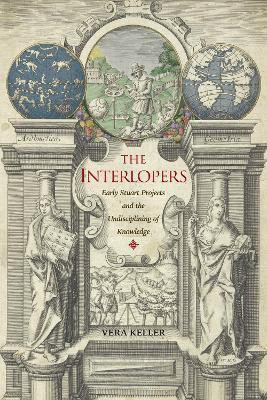
The Interlopers(English, Hardcover, Keller Vera)
- Keller Vera
Paperback & Hardcover deals ―
Amazon IndiaGOFlipkart ₹ 6059SnapdealGOSapnaOnlineGOJain Book AgencyGOBooks Wagon₹665Book ChorGOCrosswordGODC BooksGOe-book & Audiobook deals ―
Amazon India GOGoogle Play Books GOAudible GO* Price may vary from time to time.
* GO = We're not able to fetch the price (please check manually visiting the website).
Know about the book -
The Interlopers(English, Hardcover, Keller Vera) is written by Keller Vera and published by Johns Hopkins University Press. It's available with International Standard Book Number or ISBN identification 1421445921 (ISBN 10) and 9781421445922 (ISBN 13).
A reframing of how scientific knowledge was produced in the early modern world. Winner of the Phyllis Goodhart Gordan Book Prize by the Renaissance Society of America, and the Leo Gershoy Prize by the American Historical Association, Shortlisted for the Jon Ben Snow Prize by the North American Conference of British Studies Many accounts of the scientific revolution portray it as a time when scientists disciplined knowledge by first disciplining their own behavior. According to these views, scientists such as Francis Bacon produced certain knowledge by pacifying their emotions and concentrating on method. In The Interlopers, Vera Keller rejects this emphasis on discipline and instead argues that what distinguished early modernity was a navigation away from restraint and toward the violent blending of knowledge from across society and around the globe. Keller follows early seventeenth-century English "projectors" as they traversed the world, pursuing outrageous entrepreneurial schemes along the way. These interlopers were developing a different culture of knowledge, one that aimed to take advantage of the disorder created by the rise of science and technological advances. They sought to deploy the first submarine in the Indian Ocean, raise silkworms in Virginia, and establish the English slave trade. These projectors developed a culture of extreme risk-taking, uniting global capitalism with martial values of violent conquest. They saw the world as a riskscape of empty spaces, disposable people, and unlimited resources. By analyzing the disasters-as well as a few successes-of the interlopers she studies, Keller offers a new interpretation of the nature of early modern knowledge itself. While many influential accounts of the period characterize European modernity as a disciplining or civilizing process, The Interlopers argues that early modernity instead entailed a great undisciplining that entangled capitalism, colonialism, and science.
