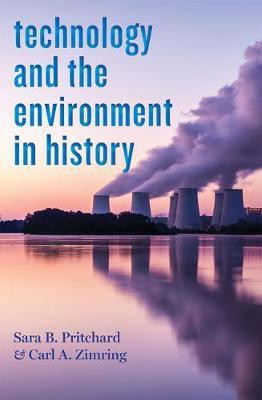
Technology and the Environment in History(English, Paperback, Pritchard Sara B.)
- Pritchard Sara B.
Paperback & Hardcover deals ―
Amazon IndiaGOFlipkart ₹ 2369SnapdealGOSapnaOnlineGOJain Book AgencyGOBooks Wagon₹192Book ChorGOCrosswordGODC BooksGOe-book & Audiobook deals ―
Amazon India GOGoogle Play Books GOAudible GO* Price may vary from time to time.
* GO = We're not able to fetch the price (please check manually visiting the website).
Know about the book -
Technology and the Environment in History(English, Paperback, Pritchard Sara B.) is written by Pritchard Sara B. and published by Johns Hopkins University Press. It's available with International Standard Book Number or ISBN identification 1421438992 (ISBN 10) and 9781421438993 (ISBN 13).
New perspectives on how envirotech can help us engage with the surrounding world in ways that are more sustainable for humanity-and the planet. Today's scientists, policymakers, and citizens are all confronted by numerous dilemmas at the nexus of technology and the environment. Every day seems to bring new worries about the dangers posed by carcinogens, "superbugs," energy crises, invasive species, genetically modified organisms, groundwater contamination, failing infrastructure, and other troubling issues. In Technology and the Environment in History, Sara B. Pritchard and Carl A. Zimring adopt an analytical approach to explore current research at the intersection of environmental history and the history of technology-an emerging field known as envirotech. Technology and the Environment in History They discuss the important topics, historical processes, and scholarly concerns that have emerged from recent work in thinking about envirotech. Each chapter focuses on a different urgent topic: * Food and Food Systems: How humans have manipulated organisms and ecosystems to produce nutrients for societies throughout history. * Industrialization: How environmental processes have constrained industrialization and required shifts in the relationships between human and nonhuman nature. * Discards: What we can learn from the multifaceted forms, complex histories, and unexpected possibilities of waste. * Disasters: How disaster, which the authors argue is common in the industrialized world, exposes the fallacy of tidy divisions among nature, technology, and society. * Body: How bodies reveal the porous boundaries among technology, the environment, and the human. * Sensescapes: How environmental and technological change have reshaped humans' (and potentially nonhumans') sensory experiences over time. Using five concepts to understand the historical relationships between technology and the environment-porosity, systems, hybridity, biopolitics, and environmental justice-Pritchard and Zimring propose a chronology of key processes, moments, and periodization in the history of technology and the environment. Ultimately, they assert, envirotechnical perspectives help us engage with the surrounding world in ways that are, we hope, more sustainable and just for both humanity and the planet. Aimed at students and scholars new to environmental history, the history of technology, and their nexus, this impressive synthesis looks outward and forward-identifying promising areas in more formative stages of intellectual development and current synergies with related areas that have emerged in the past few years, including environmental anthropology, discard studies, and posthumanism.
