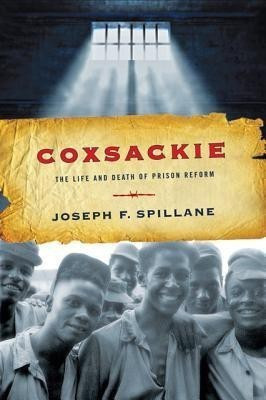
Coxsackie(English, Hardcover, Spillane Joseph F.)
- Spillane Joseph F.
Paperback & Hardcover deals ―
Amazon IndiaGOFlipkart ₹ 4090SnapdealGOSapnaOnlineGOJain Book AgencyGOBooks Wagon₹3,521Book ChorGOCrosswordGODC BooksGOe-book & Audiobook deals ―
Amazon India GOGoogle Play Books GOAudible GO* Price may vary from time to time.
* GO = We're not able to fetch the price (please check manually visiting the website).
Know about the book -
Coxsackie(English, Hardcover, Spillane Joseph F.) is written by Spillane Joseph F. and published by Johns Hopkins University Press. It's available with International Standard Book Number or ISBN identification 1421413221 (ISBN 10) and 9781421413228 (ISBN 13).
Should prisons attempt reform and uplift inmates or, by means of principled punishment, deter them from further wrongdoing? This debate has raged in Western Europe and in the United States at least since the late eighteenth century. Joseph F. Spillane examines the failure of progressive reform in New York State by focusing on Coxsackie, a New Deal reformatory built for young male offenders. Opened in 1935 to serve "adolescents adrift," Coxsackie instead became an unstable and brutalizing prison. From the start, the liberal impulse underpinning the prison's mission was overwhelmed by challenges it was unequipped or unwilling to face-drugs, gangs, and racial conflict. Spillane draws on detailed prison records to reconstruct a life behind bars in which "ungovernable" young men posed constant challenges to racial and cultural order. The New Deal order of the prison was unstable from the start; the politics of punishment quickly became the politics of race and social exclusion, and efforts to save liberal reform in postwar New York only deepened its failures. In 1977, inmates took hostages to focus attention on their grievances.The result was stricter discipline and an end to any pretense that Coxsackie was a reform institution. Why did the prison fail? For answers, Spillane immerses readers in the changing culture and racial makeup of the U.S. prison system and borrows from studies of colonial prisons, which emblematized efforts by an exploitative regime to impose cultural and racial restraint on others. In today's era of mass incarceration, prisons have become conflict-ridden warehouses and powerful symbols of racism and inequality. This account challenges the conventional wisdom that America's prison crisis is of comparatively recent vintage, showing instead how a racial and punitive system of control emerged from the ashes of a progressive ideal.
