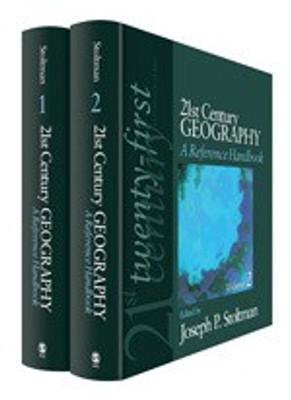
21st Century Geography: A Reference Handbook(English, Hardcover, unknown)
- unknown
Paperback & Hardcover deals ―
Amazon IndiaGOFlipkart ₹ 24183SnapdealGOSapnaOnlineGOJain Book AgencyGOBooks WagonGOBook ChorGOCrosswordGODC BooksGOe-book & Audiobook deals ―
Amazon India GOGoogle Play Books GOAudible GO* Price may vary from time to time.
* GO = We're not able to fetch the price (please check manually visiting the website).
Know about the book -
21st Century Geography: A Reference Handbook(English, Hardcover, unknown) is written by unknown and published by SAGE Publications Inc. It's available with International Standard Book Number or ISBN identification 141297464X (ISBN 10) and 9781412974646 (ISBN 13).
Via approximately 80 entries or "mini-chapters," the SAGE 21st Century Reference Series volumes on geography will highlight the most important topics, issues, questions, and debates any student obtaining a degree in this field ought to have mastered for effectiveness in the 21st century. The purpose is to provide undergraduate majors with an authoritative reference source that will serve their research needs with more detailed information than encyclopedia entries but not so much jargon, detail, or density as a journal article or a research handbook chapter. Features & Benefits: Curricular-driven to provide students with initial footholds on topics of interest in writing research term papers, in preparing for GREs, in consulting to determine directions to take in pursuing a senior thesis, graduate degree, etc. Comprehensive to offer full coverage of major subthemes and subfields within the discipline of geography, including regional geography, physical geography, global change, human and cultural geography, economic geography and locational analysis, political geography, geospatial technology, cartography, spatial thinking, research methodology, geographical education, and more. Uniform in chapter structure to make it easy for students to locate key information, with a more-or-less common chapter format of Introduction, Theory, Methods, Applications, Comparison, Future Directions, Summary, Bibliography & Suggestions for Further Reading, and Cross References. Available in print and electronic formats to provide students with convenient, easy access.
