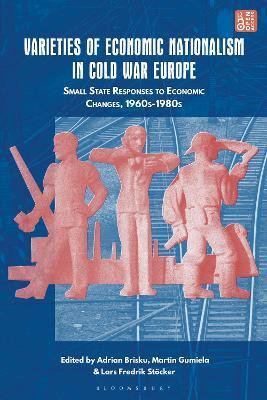
Varieties of Economic Nationalism in Cold War Europe(English, Hardcover, unknown)
- unknown
Paperback & Hardcover deals ―
Amazon IndiaGOFlipkart ₹ 8150SnapdealGOSapnaOnlineGOJain Book AgencyGOBooks Wagon₹370Book ChorGOCrosswordGODC BooksGOe-book & Audiobook deals ―
Amazon India GOGoogle Play Books GOAudible GO* Price may vary from time to time.
* GO = We're not able to fetch the price (please check manually visiting the website).
Know about the book -
Varieties of Economic Nationalism in Cold War Europe(English, Hardcover, unknown) is written by unknown and published by Bloomsbury Publishing PLC. It's available with International Standard Book Number or ISBN identification 1350428647 (ISBN 10) and 9781350428645 (ISBN 13).
Investigating the trajectories of economic nationalisms in Cold War Europe, this open access book explores the scope and limits of small (nation-)state actors pursuing and defending national economic interests in a globalizing world. In so doing, it contributes a new perspective in the economic history, political economy and nationalism literatures on post-war Europe. With this remit underscoring the inherent vulnerabilities of smaller national economies and their strategies of economic survival beyond the constraints of Cold War alignments, Varieties of Economic Nationalism in Cold War Europe reconstructs national economic discourses and policy objectives of smaller states and sub-states on both sides of the Iron Curtain from the mid-1960s through the late 1980s. Examining the impact of economic turning points such as the simultaneous crises of Western Keynesianism and Eastern Marxism-Leninism, the oil and financial shocks of the mid-1970s or the interplay of economic liberalization and decolonization on small state economic policy-making and diplomacy, eight empirical case studies are here brought together to illustrate the variety of Cold War-era economic nationalisms and their oscillation between protectionism and free market approaches. Far from being powerless and subjected to the geo-economic binaries of the early Cold War, small states in East and West were, as the contributions demonstrate, very capable of turning smallness into a strategic asset and expanding their room for manoeuvre in a quickly shifting global economy. The ebook editions of this book are available open access under a CC BY 4.0 licence on bloomsburycollections.com. Open access was funded by the Austrian Science Fund.
