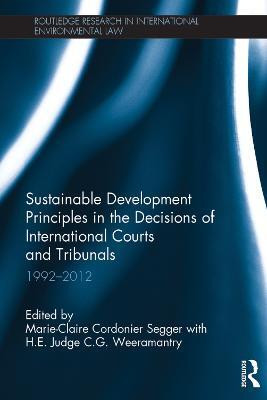
Sustainable Development Principles in the Decisions of International Courts and Tribunals(English, Electronic book text, unknown)
- unknown
Paperback & Hardcover deals ―
Amazon IndiaGOFlipkart ₹ 3432SnapdealGOSapnaOnlineGOJain Book AgencyGOBooks Wagon₹285Book ChorGOCrosswordGODC BooksGOe-book & Audiobook deals ―
Amazon India GOGoogle Play Books GOAudible GO* Price may vary from time to time.
* GO = We're not able to fetch the price (please check manually visiting the website).
Know about the book -
Sustainable Development Principles in the Decisions of International Courts and Tribunals(English, Electronic book text, unknown) is written by unknown and published by Taylor & Francis Ltd. It's available with International Standard Book Number or ISBN identification 1317670000 (ISBN 10) and 9781317670001 (ISBN 13).
The 2002 New Delhi Declaration of Principles of International Law relating to Sustainable Development set out seven principles on sustainable development, as agreed in treaties and soft-law instruments from before the 1992 Rio 'Earth Summit' UNCED, to the 2002 Johannesburg World Summit on Sustainable Development, to the 2012 Rio UNCSD. Recognition of the New Delhi principles is shaping the decisions of dispute settlement bodies with jurisdiction over many subjects: the environment, human rights, trade, investment, and crime, among others. This book explores the expanding international jurisprudence incorporating principles of international law on sustainable development. Through chapters by respected experts, the volume documents the application and interpretation of these principles, demonstrating how courts and tribunals are contributing to the world's Sustainable Development Goals, by peacefully resolving disputes. It charts the evolution of these principles in international law from soft law standards towards recognition as customary law in certain instances, assessing key challenges to further judicial consideration of the principles, and discussing, for instance, how their relevance for compliance and disputes related to the 2015 Paris Agreement on climate change. The volume provides a unique contribution of great interest to law and policy-makers, judges, academics, students, civil society and practitioners concerned with sustainable development and the law, globally.
