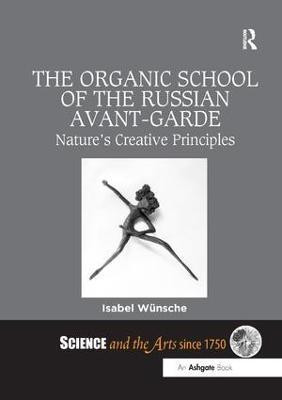
The Organic School of the Russian Avant-Garde(English, Paperback, Wuensche Isabel)
- Wuensche Isabel
Paperback & Hardcover deals ―
Amazon IndiaGOFlipkart ₹ 4295SnapdealGOSapnaOnlineGOJain Book AgencyGOBooks Wagon₹413Book ChorGOCrosswordGODC BooksGOe-book & Audiobook deals ―
Amazon India GOGoogle Play Books GOAudible GO* Price may vary from time to time.
* GO = We're not able to fetch the price (please check manually visiting the website).
Know about the book -
The Organic School of the Russian Avant-Garde(English, Paperback, Wuensche Isabel) is written by Wuensche Isabel and published by Taylor & Francis Ltd. It's available with International Standard Book Number or ISBN identification 1138548197 (ISBN 10) and 9781138548190 (ISBN 13).
The artists of the Organic School of the Russian avant-garde found inspiration as well as a model for artistic growth in the creative principles of nature. Isabel Wuensche analyzes the artistic influences, intellectual foundations, and scientific publications that shaped the formation of these artists, the majority of whom were based in St. Petersburg. Particular emphasis is given to the holistic worldviews and organic approaches prevalent among artists of the pre-revolutionary avant-garde, specifically Jan Ciaglinski, Nikolai Kulbin, and Elena Guro, as well as the emergence of the concept of Organic Culture as developed by Mikhail Matiushin, practiced at the State Institute of Artistic Culture, and taught at the reformed Art Academy in the 1920s. Discussions of faktura and creative intuition explore the biocentric approaches that dominated the work of Pavel Filonov, Kazimir Malevich, Voldemar Matvejs, Olga Rozanova, and Vladimir Tatlin. The artistic approaches of the Organic School of the Russian avant-garde were further promoted and developed by Vladimir Sterligov and his followers between 1960 and 1990. The study examines the cultural potential as well as the utopian dimension of the artists' approaches to creativity and their ambitious visions for the role of art in promoting human psychophysiological development and shaping post-revolutionary culture.
