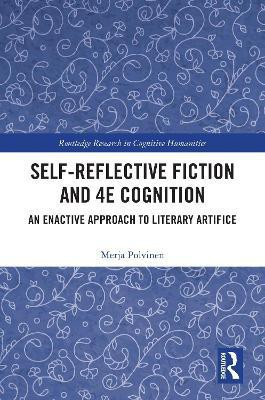
Self-Reflective Fiction and 4E Cognition(English, Electronic book text, Polvinen Merja)
- Polvinen Merja
Paperback & Hardcover deals ―
Amazon IndiaGOFlipkart ₹ 3037SnapdealGOSapnaOnlineGOJain Book AgencyGOBooks Wagon₹575Book ChorGOCrosswordGODC BooksGOe-book & Audiobook deals ―
Amazon India GOGoogle Play Books ₹43.44Audible GO* Price may vary from time to time.
* GO = We're not able to fetch the price (please check manually visiting the website).
Know about the book -
Self-Reflective Fiction and 4E Cognition(English, Electronic book text, Polvinen Merja) is written by Polvinen Merja and published by Taylor & Francis Ltd. It's available with International Standard Book Number or ISBN identification 1000818160 (ISBN 10) and 9781000818161 (ISBN 13).
This book brings together the study of self-reflective fiction and the contemporary 4E theories of cognition in order to challenge existing cognitive-theoretical models and approaches to literary phenomena. Polvinen presents reflective attention on artifice as an integral part of engagement with fictional narratives, rather than as an external viewpoint that would obscure immersive experiences. The detailed analyses included are both of traditionally metafictional texts by John Barth, A.S. Byatt, Dave Eggers, and Ali Smith, as well as of speculative fictions by Ted Chiang, China Mieville, Christopher Priest, and Catherynne M. Valente. Each of the chapters focuses on a specific issue of fictional cognition: on metaphorical representation, spatiality, temporality, and fictionality. As a whole, the book argues that by combining a literary and theoretically complex view of artifice with the enactive paradigm of perception and imagination, practitioners of cognitive literary studies can further sharpen their own conceptual and terminological apparatus and continue to generate fruitful hermeneutic circulation around the study of the imagination in both the sciences and the humanities. This book will appeal to students and scholars interested in cognitive approaches to literary studies, speculative fiction, metafiction, and narrative studies.
