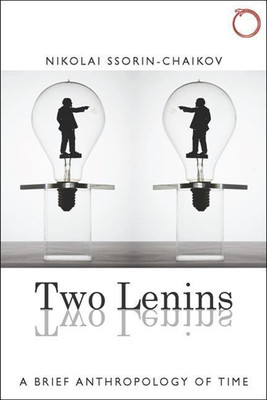
Two Lenins - A Brief Anthropology of Time Anthropology of Time(English, Paperback, Ssorin-chaikov Nikolai)
- Ssorin-chaikov Nikolai
Paperback & Hardcover deals ―
Amazon IndiaGOFlipkart ₹ 2053SnapdealGOSapnaOnlineGOJain Book AgencyGOBooks Wagon₹1,186Book ChorGOCrosswordGODC BooksGOe-book & Audiobook deals ―
Amazon India GOGoogle Play Books GOAudible GO* Price may vary from time to time.
* GO = We're not able to fetch the price (please check manually visiting the website).
Know about the book -
Two Lenins - A Brief Anthropology of Time Anthropology of Time(English, Paperback, Ssorin-chaikov Nikolai) is written by Ssorin-chaikov Nikolai and published by HAU. It's available with International Standard Book Number or ISBN identification 0997367539 (ISBN 10) and 9780997367539 (ISBN 13).
Highly innovative and theoretically incisive, Two Lenins is the first book-length anthropological examination of how social reality can be organized around different yet concurrent ideas of time. Nikolai Ssorin-Chaikov grounds his theoretical exploration in fascinating ethnographic and historical material on two Lenins: the first is the famed Soviet leader of the early twentieth century, and the second is a Siberian Evenki hunter nicknamed "Lenin" who experienced the collapse of the USSR during the 1990s. Through their intertwined stories, Ssorin-Chaikov unveils new dimensions of ethnographic reality by multiplying our notions of time. Ssorin-Chaikov examines Vladimir Lenin at the height of his reign in 1920s Soviet Russia, focusing especially on his relationship with American businessperson Armand Hammer. He casts this scene against the second Lenin the hunter on the far end of the country, in Siberia, at the far end of the century, the 1990s, who is tasked with improvising postsocialism in the economic and political uncertainties of post-Soviet transition.Moving from Moscow to Siberia to New York, and traveling form the 1920s to the 1960s to the 1990's, Ssorin-Chaikov takes readers beyond a simple global history or cross-temporal comparison, instead using these two figures to enact an ethnographic study of the very category of time that we use to bridge different historical contexts.
