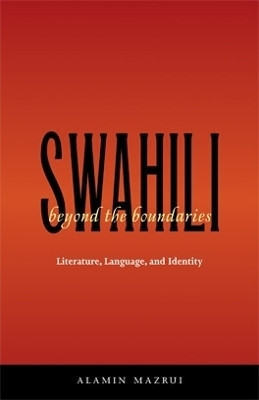
Swahili Beyond the Boundaries(English, Paperback, Mazrui Alamin)
- Mazrui Alamin
Paperback & Hardcover deals ―
Amazon IndiaGOFlipkart ₹ 2158SnapdealGOSapnaOnlineGOJain Book AgencyGOBooks Wagon₹3,842Book ChorGOCrosswordGODC BooksGOe-book & Audiobook deals ―
Amazon India GOGoogle Play Books GOAudible GO* Price may vary from time to time.
* GO = We're not able to fetch the price (please check manually visiting the website).
Know about the book -
Swahili Beyond the Boundaries(English, Paperback, Mazrui Alamin) is written by Mazrui Alamin and published by Ohio University Press. It's available with International Standard Book Number or ISBN identification 0896802523 (ISBN 10) and 9780896802520 (ISBN 13).
Africa is a marriage of cultures: African and Asian, Islamic and Euro-Christian. Nowhere is this fusion more evident than in the formation of Swahili, Eastern Africa's lingua franca, and its cultures. Swahili beyond the Boundaries: Literature, Language, and Identity addresses the moving frontiers of Swahili literature under the impetus of new waves of globalization in the twentieth and twenty-first centuries. These momentous changes have generated much theoretical debate on several literary fronts, as Swahili literature continues to undergo transformation in the mill of human creativity. Swahili literature is a hybrid that is being reconfigured by a conjuncture of global and local forces. As the interweaving of elements of the colonizer and the colonized, this hybrid formation provides a representation of cultural difference that is said to constitute a "third space," blurring existing boundaries and calling into question established identitarian categorizations. This cultural dialectic is clearly evident in the Swahili literary experience as it has evolved in the crucible of the politics of African cultural production. However, Swahili beyond the Boundaries demonstrates that, from the point of view of Swahili literature, while hybridity evokes endless openness on questions of home and identity, it can simultaneously put closure on specific forms of subjectivity. In the process of this contestation, a new synthesis may be emerging that is poised to subject Swahili literature to new kinds of challenges in the politics of identity, compounded by the dynamics and counterdynamics of post-Cold War globalization.
