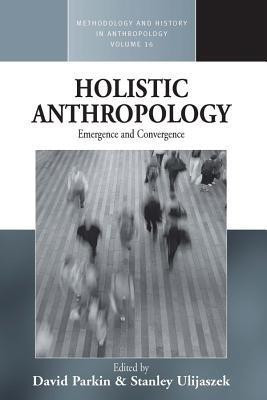
Holistic Anthropology(English, Paperback, unknown)
- unknown
Paperback & Hardcover deals ―
Amazon IndiaGOFlipkart ₹ 3606SnapdealGOSapnaOnlineGOJain Book AgencyGOBooks Wagon₹1,218Book ChorGOCrosswordGODC BooksGOe-book & Audiobook deals ―
Amazon India GOGoogle Play Books ₹16.17Audible GO* Price may vary from time to time.
* GO = We're not able to fetch the price (please check manually visiting the website).
Know about the book -
Holistic Anthropology(English, Paperback, unknown) is written by unknown and published by Berghahn Books. It's available with International Standard Book Number or ISBN identification 0857451529 (ISBN 10) and 9780857451521 (ISBN 13).
Given the broad reach of anthropology as the science of humankind, there are times when the subject fragments into specialisms and times when there is rapprochement. Rather than just seeing them as reactions to each other, it is perhaps better to say that both tendencies co-exist and that it is very much a matter of perspective as to which is dominant at any moment. The perspective adopted by the contributors to this volume is that some anthropologists have, over the last decade or so, been paying considerable attention to developments in the study of social and biological evolution and of material culture, and that this has brought social, material cultural and biological anthropologists closer to each other and closer to allied disciplines such as archaeology and psychology. A more eclectic anthropology once characteristic of an earlier age is thus re-emerging. The new holism does not result from the merging of sharply distinguished disciplines but from among anthropologists themselves who see social organization as fundamentally a problem of human ecology, and, from that, of material and mental creativity, human biology, and the co-evolution of society and culture. It is part of a wider interest beyond anthropology in the origins and rationale of human activities, claims and beliefs, and draws on inferential or speculative reasoning as well as 'hard' evidence. The book argues that, while usefully borrowing from other subjects, all such reasoning must be grounded in prolonged, intensive and linguistically-informed fieldwork and comparison.
