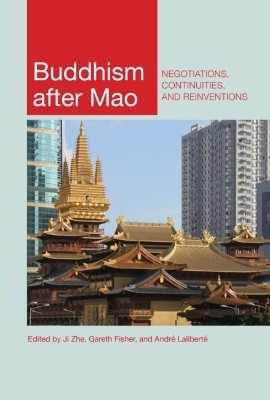
Buddhism After Mao(English, Hardcover, unknown)
- unknown
Paperback & Hardcover deals ―
Amazon IndiaGOFlipkart ₹ 2418SnapdealGOSapnaOnlineGOJain Book AgencyGOBooks Wagon₹551Book ChorGOCrosswordGODC BooksGOe-book & Audiobook deals ―
Amazon India GOGoogle Play Books GOAudible GO* Price may vary from time to time.
* GO = We're not able to fetch the price (please check manually visiting the website).
Know about the book -
Buddhism After Mao(English, Hardcover, unknown) is written by unknown and published by University of Hawai'i Press. It's available with International Standard Book Number or ISBN identification 0824877349 (ISBN 10) and 9780824877347 (ISBN 13).
With well over a 100 million adherents, Buddhism emerged from near-annihilation during the Cultural Revolution to become the largest religion in China today. Despite this, Buddhism's rise has received relatively little scholarly attention. The present volume, with contributions by leading scholars in sociology, anthropology, political science, and religious studies, explores the evolution of Chinese Buddhism in the post-Mao period with a depth not seen before in a single study. Chapters critically analyze the effects of state policies on the evolution of Buddhist institutions; the challenge of rebuilding temples under the watchful eye of the state; efforts to rebuild monastic lineages and schools left broken in the aftermath of Mao's rule; and the development of new lay Buddhist spaces, both at temple sites and online. Through its multidisciplinary perspectives, the book provides both an extensive overview of the social and political conditions under which Buddhism has grown as well as discussions of the individual projects of both monastic and lay entrepreneurs who dynamically and creatively carve out spaces for Buddhist growth in contemporary Chinese society. As a wide-ranging study that illuminates many facets of China's Buddhist revival, Buddhism after Mao will be required reading for scholars of Chinese Buddhism and of Buddhism and modernity more broadly. Its detailed case studies examining the intersections among religion, state, and contemporary Chinese society will be welcomed by sociologists and anthropologists of China, political scientists focusing on the role of religion in state formation in Asian societies, and all those interested in the relationship between religion and social change.
