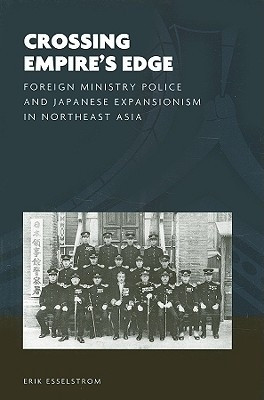
Crossing Empire's Edge(English, Hardcover, Esselstrom Erik)
- Esselstrom Erik
Paperback & Hardcover deals ―
Amazon IndiaGOFlipkart ₹ 1807SnapdealGOSapnaOnlineGOJain Book AgencyGOBooks Wagon₹361Book ChorGOCrosswordGODC BooksGOe-book & Audiobook deals ―
Amazon India GOGoogle Play Books GOAudible GO* Price may vary from time to time.
* GO = We're not able to fetch the price (please check manually visiting the website).
Know about the book -
Crossing Empire's Edge(English, Hardcover, Esselstrom Erik) is written by Esselstrom Erik and published by University of Hawai'i Press. It's available with International Standard Book Number or ISBN identification 0824832310 (ISBN 10) and 9780824832315 (ISBN 13).
For more than half a century, the Japanese Ministry of Foreign Affairs (Gaimusho) possessed an independent police force that operated within the space of Japan's informal empire on the Asian continent. Charged with 'protecting and controlling' local Japanese communities first in Korea and later in China, these consular police played a critical role in facilitating Japanese imperial expansion during the late nineteenth and twentieth centuries. Remarkably, however, this police force remains largely unknown. ""Crossing Empire's Edge"" is the first book in English to reveal its complex history.Based on extensive analysis of both archival and recently published Japanese sources, Erik Esselstrom describes how the Gaimusho police became deeply involved in the surveillance and suppression of the Korean independence movement in exile throughout Chinese treaty ports and the Manchurian frontier during the 1920s and 1930s. He thus offers a richly nuanced interpretation of Japanese expansionism by highlighting the transnational links between consular, colonial, and metropolitan policing of subversive political movements during the prewar and wartime eras. In addition, by illuminating the fervor with which consular police often pressed for unilateral solutions to Japan's political security crises on the continent, he challenges orthodox understandings of the relationship between civil and military institutions within the imperial Japanese state.Revealing a far greater complexity of motivation behind the Japanese colonial mission, ""Crossing Empire's Edge"" boldly illustrates how the imperial Japanese state viewed political security at home as inextricably connected to political security abroad from as early as 1919 - nearly a decade before overt military aggression began.
