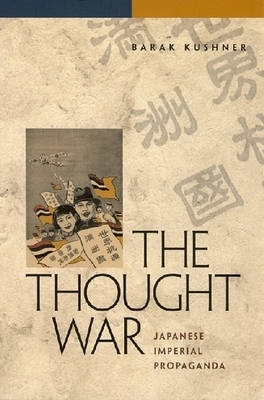
The Thought War(English, Paperback, Kushner Barak)
- Kushner Barak
Paperback & Hardcover deals ―
Amazon IndiaGOFlipkart ₹ 2650SnapdealGOSapnaOnlineGOJain Book AgencyGOBooks Wagon₹1,456Book ChorGOCrosswordGODC BooksGOe-book & Audiobook deals ―
Amazon India GOGoogle Play Books GOAudible GO* Price may vary from time to time.
* GO = We're not able to fetch the price (please check manually visiting the website).
Know about the book -
The Thought War(English, Paperback, Kushner Barak) is written by Kushner Barak and published by University of Hawai'i Press. It's available with International Standard Book Number or ISBN identification 0824832086 (ISBN 10) and 9780824832087 (ISBN 13).
The Thought War is the first book in English to examine the full extent of Japan's wartime propaganda. Based on a wide range of archival material and sources in Japanese, Chinese, and English, it explores the propaganda programs of the Japanese government from 1931 to 1945, demonstrating the true scope of imperial propaganda and its pervasive influence, an influence that is still felt today. Contrary to popular postwar rhetoric, it was not emperor worship or military authoritarianism that led an entire nation to war. Rather, it was the creation of a powerful image of Japan as the leader of modern Asia and the belief that the Japanese could and would guide Asia to a new, glorious period of reform that appealed to imperial subjects. Kushner analyzes the role of the police and military in defining socially acceptable belief and behavior by using their influence to root out malcontents. His research is the first of its kind to treat propaganda as a profession in wartime Japan. He shows that the leadership was not confined to the crude tools of sloganeering and government-sponsored demonstrations but was able instead to appropriate the expertise of the nation's advertising firms to "sell" the image of Japan as Asia's leader and modernizer. In his exploration of the propaganda war in popular culture and the entertainment industry, Kushner discloses how entertainers sought to bolster their careers by adopting as their own pro-war messages that then filtered down into society and took hold. Japanese propaganda frequently conflicted with Chinese and American visions of empire, and Kushner reveals the reactions of these two nations to Japan's efforts and the meaning of their responses.
