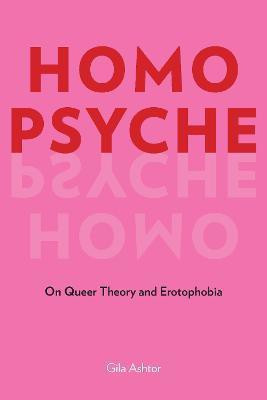
Homo Psyche(English, Electronic book text, Ashtor Gila)
- Ashtor Gila
Paperback & Hardcover deals ―
Amazon IndiaGOFlipkart ₹ 2647SnapdealGOSapnaOnlineGOJain Book AgencyGOBooks Wagon₹511Book ChorGOCrosswordGODC BooksGOe-book & Audiobook deals ―
Amazon India GOGoogle Play Books ₹32.99Audible GO* Price may vary from time to time.
* GO = We're not able to fetch the price (please check manually visiting the website).
Know about the book -
Homo Psyche(English, Electronic book text, Ashtor Gila) is written by Ashtor Gila and published by Fordham University Press. It's available with International Standard Book Number or ISBN identification 082329417X (ISBN 10) and 9780823294176 (ISBN 13).
Winner, Alan Bray Memorial Book Award 2022 Lammy Finalist, LGBTQ Studies Can queer theory be erotophobic? This book proceeds from the perplexing observation that for all of its political agita, rhetorical virtuosity, and intellectual restlessness, queer theory conforms to a model of erotic life that is psychologically conservative and narrow. Even after several decades of combative, dazzling, irreverent queer critical thought, the field remains far from grasping that sexuality's radical potential lies in its being understood as "exogenous, intersubjective and intrusive" (Laplanche). In particular, and despite the pervasiveness and popularity of recent calls to deconstruct the ideological foundations of contemporary queer thought, no study has as yet considered or in any way investigated the singular role of psychology in shaping the field's conceptual impasses and politico-ethical limitations. Through close readings of key thinkers in queer theoretical thought-Eve Kosofsky Sedgwick, Leo Bersani, Lee Edelman, Judith Butler, Lauren Berlant, and Jane Gallop-Homo Psyche introduces metapsychology as a new dimension of analysis vis-a-vis the theories of French psychoanalyst Jean Laplanche, who insisted on "new foundations for psychoanalysis" that radically departed from existing Freudian and Lacanian models of the mind. Staging this intervention, Ashtor deepens current debates about the future of queer studies by demonstrating how the field's systematic neglect of metapsychology as a necessary and independent realm of ideology ultimately enforces the complicity of queer studies with psychological conventions that are fundamentally erotophobic and therefore inimical to queer theory's radical and ethical project.
