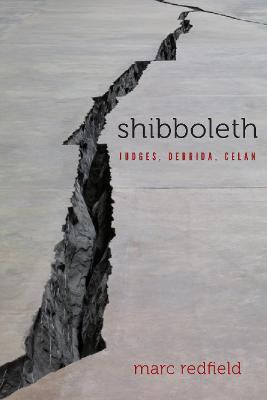
Shibboleth(English, Electronic book text, Redfield Marc)
- Redfield Marc
Paperback & Hardcover deals ―
Amazon IndiaGOFlipkart ₹ 2637SnapdealGOSapnaOnlineGOJain Book AgencyGOBooks Wagon₹7,340Book ChorGOCrosswordGODC BooksGOe-book & Audiobook deals ―
Amazon India GOGoogle Play Books ₹30.99Audible GO* Price may vary from time to time.
* GO = We're not able to fetch the price (please check manually visiting the website).
Know about the book -
Shibboleth(English, Electronic book text, Redfield Marc) is written by Redfield Marc and published by Fordham University Press. It's available with International Standard Book Number or ISBN identification 0823289087 (ISBN 10) and 9780823289080 (ISBN 13).
Working from the Bible to contemporary art, Shibboleth surveys the linguistic performances behind the politics of border crossings and the policing of identities. In the Book of Judges, the Gileadites use the word shibboleth to target and kill members of a closely related tribe, the Ephraimites, who cannot pronounce the initial shin phoneme. In modern European languages, shibboleth has come to mean a hard-to-falsify sign that winnows identities and establishes and confirms borders. It has also acquired the ancillary meanings of slogan or cliche. The semantic field of shibboleth thus seems keyed to the waning of the logos in an era of technical reproducibility-to the proliferation of technologies and practices of encryption, decryption, exclusion and inclusion that saturate modern life. The various phenomena we sum up as neoliberalism and globalization are unimaginable in the absence of shibboleth-technologies. In the context of an unending refugee crisis and a general displacement, monitoring and quarantining of populations within a global regime of technics, Paul Celan's subtle yet fierce reorientation of shibboleth merits scrupulous reading. This book interprets the episode in Judges together with Celan's poems and Jacques Derrida's reading of them, as well as passages from William Faulkner's Absalom, Absalom! and Doris Salcedo's 2007 installation Shibboleth at the Tate Modern. Redfield pursues the track of shibboleth: a word to which no language can properly lay claim-a word that is both less and more than a word, that signifies both the epitome and the ruin of border control technology, and that thus, despite its violent role in the Biblical story, offers a locus of poetico-political affirmation.
