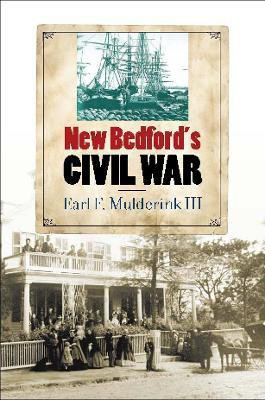
New Bedford's Civil War(English, Hardcover, Mulderink Earl F.)
- Mulderink Earl F.
Paperback & Hardcover deals ―
Amazon IndiaGOFlipkart ₹ 3121SnapdealGOSapnaOnlineGOJain Book AgencyGOBooks Wagon₹780Book ChorGOCrosswordGODC BooksGOe-book & Audiobook deals ―
Amazon India GOGoogle Play Books ₹60Audible GO* Price may vary from time to time.
* GO = We're not able to fetch the price (please check manually visiting the website).
Know about the book -
New Bedford's Civil War(English, Hardcover, Mulderink Earl F.) is written by Mulderink Earl F. and published by Fordham University Press. It's available with International Standard Book Number or ISBN identification 0823243346 (ISBN 10) and 9780823243341 (ISBN 13).
New Bedford's Civil War examines the social, political, economic, and military history of New Bedford, Massachusetts, in the nineteenth century, with a focus on the Civil War homefront from 1861 to 1865 and on the city's black community, soldiers, and veterans. Earl Mulderink's engaging work contributes to the growing body of Civil War studies that analyzes the "war at home" by focusing on the bustling center of the world's whaling industry in the nineteenth century. Using a broad chronological framework of the 1840s through the 1890s, this book contextualizes the rise and fall of New Bedford's whaling enterprise and details the war's multifaceted impacts between 1861 and 1865. A major goal of this book is to explore the war's social history by examining how the conflict touched the city's residents-both white and black. Known before the war for both its wealth and its antislavery fervor, New Bedford offered a congenial home for a sizeable black community that experienced a "different Civil War" than did native-born whites. Drawing upon military pension files, published accounts, and welfare records, this book pays particular attention to soldiers and families connected with the Fifty-fourth Massachusetts Volunteer Infantry, the "brave black regiment" (made famous by the Academy Award-winning 1989 film Glory) that helped shape national debates over black military enlistment, equal pay, and notions of citizenship. New Bedford's enlightened white leaders, many of them wealthy whaling merchants with Quaker roots, actively promoted military enlistment that pulled 2,000 local citizen-soldiers (about 10 percent of the city's total population) into the Union ranks. As the Whaling City gave way to a postwar landscape marked by textile manufacturing and heavy foreign immigration, the black community fought to keep alive the meaning and history of the Civil War. Joining their one-time neighbor Frederick Douglass, New Bedford's black veterans used the memory of the war and their participation in it to push for full equality-a losing battle by the turn of the twentieth century.
