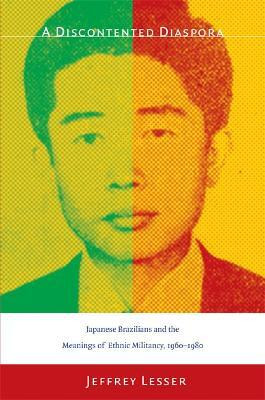
A Discontented Diaspora(English, Paperback, Lesser Jeffrey)
- Lesser Jeffrey
Paperback & Hardcover deals ―
Amazon IndiaGOFlipkart ₹ 3382SnapdealGOSapnaOnlineGOJain Book AgencyGOBooks Wagon₹3,852Book ChorGOCrosswordGODC BooksGOe-book & Audiobook deals ―
Amazon India GOGoogle Play Books GOAudible GO* Price may vary from time to time.
* GO = We're not able to fetch the price (please check manually visiting the website).
Know about the book -
A Discontented Diaspora(English, Paperback, Lesser Jeffrey) is written by Lesser Jeffrey and published by Duke University Press. It's available with International Standard Book Number or ISBN identification 082234081X (ISBN 10) and 9780822340812 (ISBN 13).
In A Discontented Diaspora, Jeffrey Lesser investigates broad questions of ethnicity, the nature of diasporic identity, and Brazilian culture. He does so by exploring particular experiences of young Japanese Brazilians who came of age in SAo Paulo during the 1960s and 1970s, an intensely authoritarian period of military rule. The most populous city in Brazil, SAo Paulo was also the world's largest "Japanese" city outside of Japan by 1960. Believing that their own regional identity should be the national one, residents of SAo Paulo constantly discussed the relationship between Brazilianness and Japaneseness. As second-generation Nikkei (Brazilians of Japanese descent) moved from the agricultural countryside of their immigrant parents into various urban professions, they became the "best Brazilians" in terms of their ability to modernize the country and the "worst Brazilians" because they were believed to be the least likely to fulfill the cultural dream of whitening. Lesser analyzes how Nikkei both resisted and conformed to others' perceptions of their identity as they struggled to define and claim their own ethnicity within SAo Paulo during the military dictatorship. Lesser draws on a wide range of sources, including films, oral histories, wanted posters, advertisements, newspapers, photographs, police reports, government records, and diplomatic correspondence. He focuses on two particular cultural arenas-erotic cinema and political militancy-which highlight the ways that Japanese Brazilians imagined themselves to be Brazilian. As he explains, young Nikkei were sure that their participation in these two realms would be recognized for its Brazilianness. They were mistaken. Whether joining banned political movements, training as guerrilla fighters, or acting in erotic films, the subjects of A Discontented Diaspora militantly asserted their Brazilianness only to find that doing so reinforced their minority status.
