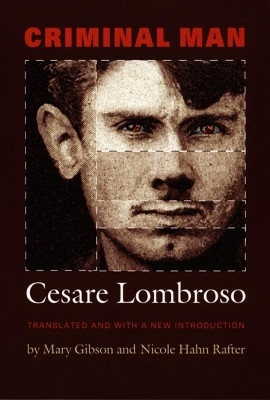
Criminal Man(English, Paperback, Lombroso Cesare)
- Lombroso Cesare
Paperback & Hardcover deals ―
Amazon IndiaGOFlipkart ₹ 3111SnapdealGOSapnaOnlineGOJain Book AgencyGOBooks Wagon₹2,500Book ChorGOCrosswordGODC BooksGOe-book & Audiobook deals ―
Amazon India GOGoogle Play Books GOAudible GO* Price may vary from time to time.
* GO = We're not able to fetch the price (please check manually visiting the website).
Know about the book -
Criminal Man(English, Paperback, Lombroso Cesare) is written by Lombroso Cesare and published by Duke University Press. It's available with International Standard Book Number or ISBN identification 0822337231 (ISBN 10) and 9780822337232 (ISBN 13).
Cesare Lombroso is widely considered the founder of criminology. His theory of the "born" criminal dominated European and American thinking about the causes of criminal behavior during the late nineteenth century and the early twentieth. This volume offers English-language readers the first critical, scholarly translation of Lombroso's Criminal Man, one of the most famous criminological treatises ever written. The text laid the groundwork for subsequent biological theories of crime, including contemporary genetic explanations. Originally published in 1876, Criminal Man went through five editions during Lombroso's lifetime. In each edition Lombroso expanded on his ideas about innate criminality and refined his method for categorizing criminal behavior. In this new translation, Mary Gibson and Nicole Hahn Rafter bring together for the first time excerpts from all five editions in order to represent the development of Lombroso's thought and his positivistic approach to understanding criminal behavior. In Criminal Man, Lombroso used modern Darwinian evolutionary theories to "prove" the inferiority of criminals to "honest" people, of women to men, and of blacks to whites, thereby reinforcing the prevailing politics of sexual and racial hierarchy. He was particularly interested in the physical attributes of criminals-the size of their skulls, the shape of their noses-but he also studied the criminals' various forms of self-expression, such as letters, graffiti, drawings, and tattoos. This volume includes more than forty of Lombroso's illustrations of the criminal body along with several photographs of his personal collection. Designed to be useful for scholars and to introduce students to Lombroso's thought, the volume also includes an extensive introduction, notes, appendices, a glossary, and an index.
