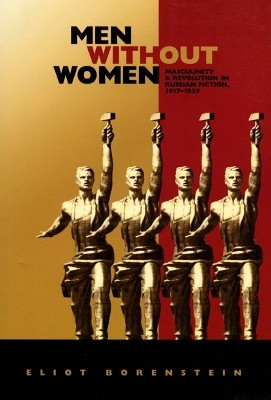
Men Without Women(English, Paperback, Borenstein Eliot)
- Borenstein Eliot
Paperback & Hardcover deals ―
Amazon IndiaGOFlipkart ₹ 4592SnapdealGOSapnaOnlineGOJain Book AgencyGOBooks Wagon₹267Book ChorGOCrosswordGODC BooksGOe-book & Audiobook deals ―
Amazon India GOGoogle Play Books GOAudible GO* Price may vary from time to time.
* GO = We're not able to fetch the price (please check manually visiting the website).
Know about the book -
Men Without Women(English, Paperback, Borenstein Eliot) is written by Borenstein Eliot and published by Duke University Press. It's available with International Standard Book Number or ISBN identification 0822325926 (ISBN 10) and 9780822325925 (ISBN 13).
In Men without Women Eliot Borenstein examines the literature of the early Soviet period to shed new light on the iconic Russian concept of comradeship. By analyzing a variety of Russian writers who span the ideological spectrum, Borenstein provides an illuminating reading of the construction of masculinity in Soviet culture. In each example he identifies the replacement of blood ties with ideology and the creation of a social order in which the family has been supplanted by the collective. In such works as Red Cavalry by Isaac Babel, Envy by Yuri Olesha, and Chevengur by Andrei Platonov women are either absent or transformed into bodiless abstractions. Their absence, claims Borenstein, reflects the masculine values that are hallmarks of the post-revolutionary era: production rather than reproduction, participation in history rather than domestic ahistoricity, heavy industry, construction, and struggle. He identifies in this literature groups of "men without women" replacing the family, even while the metaphor of family is used as an organizing feature of their recurring revolutionary missions. With the passage of time, these characters' relationships-just as those in the Soviet culture of the time-begin to resemble the family structure that was originally rejected and destroyed, with one important exception: the new "families" had no place for women. According to Borenstein, this masculinist myth found its most congenial audience during the early period of communism, but its hostility to women and family ties could not survive into the Stalinist era when women, home, and family were no longer seen as antithetical to socialism. Drawing on the theory and writings of Levi-Strauss, Girard, Sedgwick, and others, Men Without Women will be of interest to students and scholars of Slavic literature and history as well as specialists in literary theory and gender studies.
