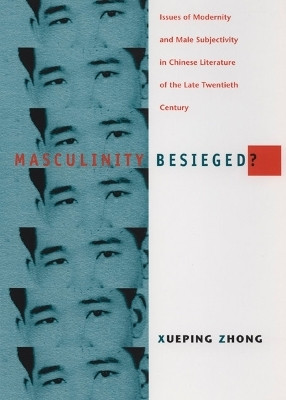
Masculinity Besieged?(English, Paperback, Zhong Xueping)
- Zhong Xueping
Paperback & Hardcover deals ―
Amazon IndiaGOFlipkart ₹ 1363SnapdealGOSapnaOnlineGOJain Book AgencyGOBooks Wagon₹1,009Book ChorGOCrosswordGODC BooksGOe-book & Audiobook deals ―
Amazon India GOGoogle Play Books GOAudible GO* Price may vary from time to time.
* GO = We're not able to fetch the price (please check manually visiting the website).
Know about the book -
Masculinity Besieged?(English, Paperback, Zhong Xueping) is written by Zhong Xueping and published by Duke University Press. It's available with International Standard Book Number or ISBN identification 0822324423 (ISBN 10) and 9780822324423 (ISBN 13).
In Masculinity Besieged? Xueping Zhong looks at Chinese literature and films produced during the 1980s to examine male subjectivities in contemporary China. Reading through a feminist psychoanalytic lens, Zhong argues that understanding the nature of male subjectivities as portrayed in literature and film is crucial to understanding China's ongoing quest for modernity. Before the 1990s onslaught of popular culture decentered the role of intellectuals within the nation, they had come to embody Chinese masculinity during the previous decade. The focus on masculinity in literature had become unprecedented in scale and the desire for "real men" began to permeate Chinese popular culture, making icons out of Rambo and Takakura Ken. Stories by Zhang Xianliang and Liu Heng portraying male anxiety about masculine sexuality are employed by Zhong to show how "marginal" males negotiate their sexual identities in relation to both women and the state. Looking at writers popular among not only the well-educated but also the working and middle classes, she discusses works by Han Shaogong, Yu Hua, and Wang Shuo and examines instances of self-loathing male voices, particularly as they are articulated in Mo Yan's well-known work Red Sorghum. In her last chapter Zhong examines "roots literature," which speaks of the desire to create strong men as a part of the effort to create a geopolitically strong Chinese nation. In an afterword, Zhong situates her study in the context of the 1990s. This book will be welcomed by scholars of Chinese cultural studies, as well as in literary and gender studies.
