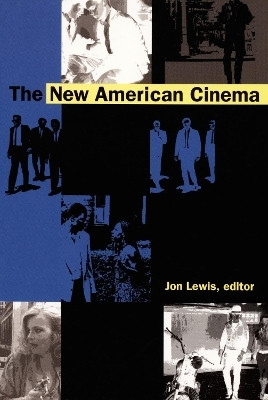
The New American Cinema(English, Paperback, unknown)
- unknown
Paperback & Hardcover deals ―
Amazon IndiaGOFlipkart ₹ 3005SnapdealGOSapnaOnlineGOJain Book AgencyGOBooks Wagon₹502Book ChorGOCrosswordGODC BooksGOe-book & Audiobook deals ―
Amazon India GOGoogle Play Books GOAudible GO* Price may vary from time to time.
* GO = We're not able to fetch the price (please check manually visiting the website).
Know about the book -
The New American Cinema(English, Paperback, unknown) is written by unknown and published by Duke University Press. It's available with International Standard Book Number or ISBN identification 0822321157 (ISBN 10) and 9780822321156 (ISBN 13).
This collection of essays provides the first comprehensive survey of Hollywood and independent films from the mid-sixties to the present. Deliberately eclectic and panoramic, The New American Cinema brings together thirteen leading film scholars who present a range of theoretical, critical, and historical perspectives on this rich and pivotal era in American cinema. The essays are divided into three sections: "Movies and Money," "Cinema and Culture," and "Independents and Independence." The first section focuses on the economics of the industry and analyzes the connection between the film business and the finished product. Topics include a look at the economic conditions that made the seventies' auteur renaissance possible, the distribution of studio and independent films, and the recent spate of mergers and acquisitions that have come to characterize the new Hollywood. The second part of The New American Cinema deals with the political and cultural significance of war and Vietnam films (Platoon, Apocalypse Now, Born on the Fourth of July); "male rampage" films (Rambo, Lethal Weapon, Die Hard); women's psychothrillers (The Silence of the Lambs); special effects pictures (2001: A Space Odyssey, Star Wars); and historical re-presentations (Oliver Stone's JFK). The final section casts a keen eye on films produced and exhibited outside the commercial mainstream, examining the financial realities of "indie" films; the influence of independent filmmaker John Cassavetes on Coppola, Altman, and Scorsese; the stereotyping of African Americans in mainstream cinema; and the films of independent women filmmakers.
