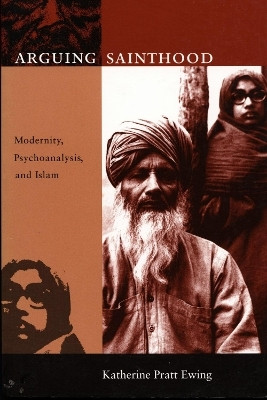
Arguing Sainthood(English, Hardcover, Ewing Katherine Pratt)
- Ewing Katherine Pratt
Paperback & Hardcover deals ―
Amazon IndiaGOFlipkart ₹ 11762SnapdealGOSapnaOnlineGOJain Book AgencyGOBooks Wagon₹1,252Book ChorGOCrosswordGODC BooksGOe-book & Audiobook deals ―
Amazon India GOGoogle Play Books GOAudible GO* Price may vary from time to time.
* GO = We're not able to fetch the price (please check manually visiting the website).
Know about the book -
Arguing Sainthood(English, Hardcover, Ewing Katherine Pratt) is written by Ewing Katherine Pratt and published by Duke University Press. It's available with International Standard Book Number or ISBN identification 0822320266 (ISBN 10) and 9780822320265 (ISBN 13).
In Arguing Sainthood, Katherine Pratt Ewing examines Sufi religious meanings and practices in Pakistan and their relation to the Westernizing influences of modernity and the shaping of the postcolonial self. Using both anthropological fieldwork and psychoanalytic theory to critically reinterpret theories of subjectivity, Ewing examines the production of identity in the context of a complex social field of conflicting ideologies and interests. Ewing critiques Eurocentric cultural theorists and Orientalist discourse while also taking issue with expatriate postcolonial thinkers Homi Bhabha and Gayatri Spivak. She challenges the notion of a monolithic Islamic modernity in order to explore the lived realities of individuals, particularly those of Pakistani saints and their followers. By examining the continuities between current Sufi practices and earlier popular practices in the Muslim world, Ewing identifies in the Sufi tradition a reflexive, critical consciousness that has usually been associated with the modern subject. Drawing on her training in clinical and theoretical psychoanalysis as well as her anthropological fieldwork in Lahore, Pakistan, Ewing argues for the value of Lacan in anthropology as she provides the basis for retheorizing postcolonial studies.
