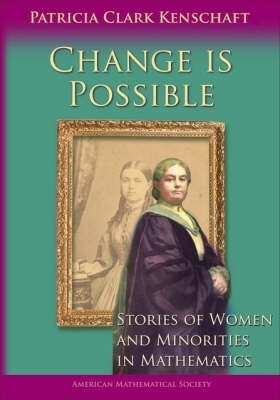
Change Is Possible(English, Paperback, American Mathematical Society)
- American Mathematical Society
Paperback & Hardcover deals ―
Amazon IndiaGOFlipkart ₹ 2949SnapdealGOSapnaOnlineGOJain Book AgencyGOBooks Wagon₹169Book ChorGOCrosswordGODC BooksGOe-book & Audiobook deals ―
Amazon India GOGoogle Play Books ₹37Audible GO* Price may vary from time to time.
* GO = We're not able to fetch the price (please check manually visiting the website).
Know about the book -
Change Is Possible(English, Paperback, American Mathematical Society) is written by American Mathematical Society and published by American Mathematical Society. It's available with International Standard Book Number or ISBN identification 0821837486 (ISBN 10) and 9780821837481 (ISBN 13).
Based on dozens of interviews and extensive historical research, and spiced with interesting photographs, this entertaining book relates stories about mathematicians who have defied stereotypes. There are five chapters about women that provide insight into the nineteenth and the mid-twentieth century, the early 1970s, the early 1990s, and 2004. Activists in many fields will take heart at the progress made during that time. The author documents the rudimentary struggles to become professionals, being married without entirely giving up a career, organizing to eliminate flagrant discrimination, improving the daily treatment of women in the professional community, and the widespread efforts toward true equality.The stories of African Americans in mathematics include the efforts of Benjamin Banneker, an eighteenth century American who had three grandparents born in Africa. He helped design Washington, DC, and made the computations for almanacs that succeeded Benjamin Franklin's. There are stories about African American mathematicians who were students and faculty in late nineteenth century colleges and accounts of several efforts to integrate the mathematical community in the mid-twentieth century. These stories indicate that though some efforts were more successful than others, all of them were difficult.The book concludes with a happier chapter about five black mathematicians in the early twenty-first century. The book also includes five interviews with leading Latin American mathematicians, along with the results of a survey of Latino research mathematicians in the Southwest. The author is a skilled story-teller with good stories to tell. This book is a page-turner that all mathematicians - as well as other concerned with equality - should read. It is a work of great interest and an enjoyable read.
