Redrawing the Historical Past(English, Paperback, unknown)
- unknown
Paperback & Hardcover deals ―
Amazon IndiaGOFlipkart ₹ 4682SnapdealGOSapnaOnlineGOJain Book AgencyGOBooks Wagon₹280Book ChorGOCrosswordGODC BooksGOe-book & Audiobook deals ―
Amazon India GOGoogle Play Books GOAudible GO* Price may vary from time to time.
* GO = We're not able to fetch the price (please check manually visiting the website).
Know about the book -
Redrawing the Historical Past(English, Paperback, unknown) is written by unknown and published by University of Georgia Press. It's available with International Standard Book Number or ISBN identification 0820352004 (ISBN 10) and 9780820352008 (ISBN 13).
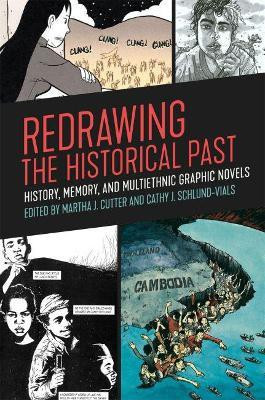
Redrawing the Historical Past examines how multiethnic graphic novels portray and revise U.S. history. This is the first collection to focus exclusively on the interplay of history and memory in multiethnic graphic novels. Such interplay enables a new understanding of the past. The twelve essays explore Mat Johnson and Warren Pleece's Incognegro, Gene Luen Yang's Boxers and Saints, GB Tran's Vietnamerica, Scott McCloud's The New Adventures of Abraham Lincoln, Art Spiegelman's post-Maus work, and G. Neri and Randy DuBurke's Yummy: The Last Days of a Southside Shorty, among many others. The collection represents an original body of criticism about recently published works that have received scant scholarly attention. The chapters confront issues of history and memory in contemporary multiethnic graphic novels, employing diverse methodologies and approaches while adhering to three main guidelines. First, using a global lens, contributors reconsider the concept of history and how it is manifest in their chosen texts. Second, contributors consider the ways in which graphic novels, as a distinct genre, can formally renovate or intervene in notions of the historical past. Third, contributors take seriously the possibilities and limitations of these historical revisions with regard to envisioning new, different, or even more positive versions of both the present and future. As a whole, the volume demonstrates that graphic novelists use the open and flexible space of the graphic narrative page-in which readers can move not only forward but also backward, upward, downward, and in several other directions-to present history as an open realm of struggle that is continually being revised. Contributors: Frederick Luis Aldama, Julie Buckner Armstrong, Katharine Capshaw, Monica Chiu, Jennifer Glaser, Taylor Hagood, Caroline Kyungah Hong, Angela Lafien, Catherine H. Nguyen, Jeffrey Santa Ana, and Jorge Santos.
