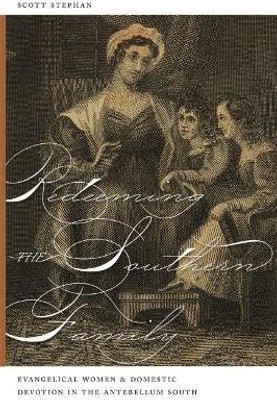
Redeeming the Southern Family(English, Paperback, Stephan Scott)
- Stephan Scott
Paperback & Hardcover deals ―
Amazon IndiaGOFlipkart ₹ 4251SnapdealGOSapnaOnlineGOJain Book AgencyGOBooks Wagon₹495Book ChorGOCrosswordGODC BooksGOe-book & Audiobook deals ―
Amazon India GOGoogle Play Books GOAudible GO* Price may vary from time to time.
* GO = We're not able to fetch the price (please check manually visiting the website).
Know about the book -
Redeeming the Southern Family(English, Paperback, Stephan Scott) is written by Stephan Scott and published by University of Georgia Press. It's available with International Standard Book Number or ISBN identification 0820339806 (ISBN 10) and 9780820339801 (ISBN 13).
In the years leading up to the Civil War, southern evangelical denominations moved from the fringes to the mainstream of the American South. Scott Stephan argues that female Baptists, Methodists, and Presbyterians played a crucial role in this transformation. While other scholars have pursued studies of southern evangelicalism in the context of churches, meetinghouses, and revivals, Stephan looks at the domestic rituals over which southern women had increasing authority-from consecrating newborns to God's care to ushering dying kin through life's final stages. Laymen and clergymen alike celebrated the contributions of these pious women to the experience and expansion of evangelicalism across the South. This acknowledged domestic authority allowed some women to take on more public roles in the conversion and education of southern youth within churches and academies, although always in the name of family and always cloaked in the language of Christian self-abnegation. At the same time, however, women's work in the name of domestic devotion often put them at odds with slaves, children, or husbands in their households who failed to meet their religious expectations and thereby jeopardized evangelical hopes of heavenly reunification of the family. Stephan uses the journals and correspondence of evangelical women from across the South to understand the interconnectedness of women's personal, family, and public piety. Rather than seeing evangelical women as entirely oppressed or resigned to the limits of their position in a patriarchal slave society, Stephan seeks to capture a sense of what agency was available to women through their moral authority.
