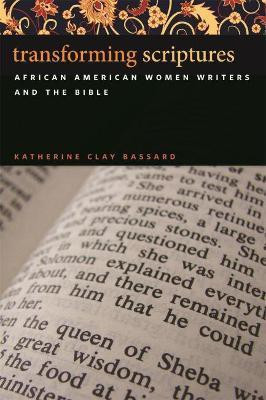
Transforming Scriptures(English, Paperback, Bassard Katherine Clay)
- Bassard Katherine Clay
Paperback & Hardcover deals ―
Amazon IndiaGOFlipkart ₹ 4217SnapdealGOSapnaOnlineGOJain Book AgencyGOBooks Wagon₹688Book ChorGOCrosswordGODC BooksGOe-book & Audiobook deals ―
Amazon India GOGoogle Play Books GOAudible GO* Price may vary from time to time.
* GO = We're not able to fetch the price (please check manually visiting the website).
Know about the book -
Transforming Scriptures(English, Paperback, Bassard Katherine Clay) is written by Bassard Katherine Clay and published by University of Georgia Press. It's available with International Standard Book Number or ISBN identification 082033880X (ISBN 10) and 9780820338804 (ISBN 13).
Transforming Scriptures is the first sustained treatment of African American women writers' intellectual, even theological, engagements with the book Northrop Frye referred to as the "great code" of Western civilization. Katherine Clay Bassard looks at poetry, novels, speeches, sermons, and prayers by Maria W. Stewart, Frances Harper, Hannah Crafts, Harriet E. Wilson, Harriet Jacobs, Zora Neale Hurston, Toni Morrison, and Sherley Anne Williams and discusses how such texts respond as a collective "literary witness" to the use of the Bible for purposes of social domination. Black women's historic encounters with the Bible were, indeed, transformational; in the process of "turning cursing into blessing" these women were both shaped and reshaped by the scriptures they appropriated for their own self-representation. Two important biblical figures emerge as key tropes around which women fashioned a counternarrative to the dominant culture's "curse" on black female identity: the "talking mule" from Numbers 22 and the "black but comely" Shulamite of Song of Songs, the Queen of Sheba. Transforming Scriptures analyzes these tropes within a range of contexts, from biblical justifications of slavery and the second-class status of women to hermeneutical and post-structural critiques of the Bible. African American women's appropriations of scripture occur within a continuum of African American Bible-reading practices and religious or ideological commitments, argues Bassard. There is thus no single "black women's hermeneutic"; rather, theories of African American women and the Bible must account for historical and social change and difference.
