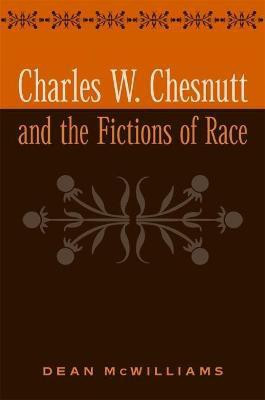
Charles W. Chesnutt and the Fictions of Race(English, Electronic book text, McWilliams Dean)
- McWilliams Dean
Paperback & Hardcover deals ―
Amazon IndiaGOFlipkart ₹ 3173SnapdealGOSapnaOnlineGOJain Book AgencyGOBooks Wagon₹2,036Book ChorGOCrosswordGODC BooksGOe-book & Audiobook deals ―
Amazon India GOGoogle Play Books ₹31.69Audible GO* Price may vary from time to time.
* GO = We're not able to fetch the price (please check manually visiting the website).
Know about the book -
Charles W. Chesnutt and the Fictions of Race(English, Electronic book text, McWilliams Dean) is written by McWilliams Dean and published by University of Georgia Press. It's available with International Standard Book Number or ISBN identification 0820327247 (ISBN 10) and 9780820327242 (ISBN 13).
Charles Chesnutt (1858-1932) was the first African American writer of fiction to win the attention and approval of America's literary establishment. Looking anew at Chesnutt's public and private writings, his fiction and nonfiction, and his well-known and recently rediscovered works, Dean McWilliams explores Chesnutt's distinctive contribution to American culture: how his stories and novels challenge our dominant cultural narratives-particularly their underlying assumptions about race. The published canon of Chesnutt's work has doubled in the last decade: three novels completed but unpublished in Chesnutt's life have appeared, as have scholarly editions of Chesnutt's journals, his letters, and his essays. This book is the first to offer chapter-length analyses of each of Chesnutt's six novels. It also devotes three chapters to his short fiction. Previous critics have read Chesnutt's nonfiction as biographical background for his fiction. McWilliams is the first to analyze these nonfiction texts as complex verbal artifacts embodying many of the same tensions and ambiguities found in Chesnutt's stories and novels. The book includes separate chapters on Chesnutt's journal and on his important essay "The Future American." Moreover, Charles W. Chesnutt and the Fictions of Race approaches Chesnutt's writings from the perspective of recent literary theory. To a greater extent than any previous study of Chesnutt, it explores the way his texts interrogate and deconstruct the language and the intellectual constructs we use to organize reality. The full effect of this new study is to show us how much more of a twentieth-century writer Chesnutt is than has been previously acknowledged. This accomplishment can only hasten his reemergence as one of our most important observers of race in American culture.
