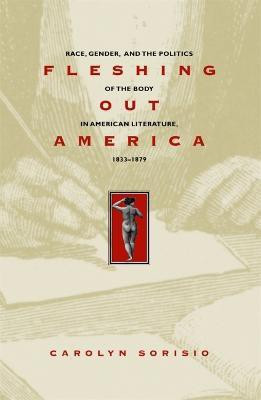
Fleshing Out America(English, Electronic book text, Sorisio Carolyn)
- Sorisio Carolyn
Paperback & Hardcover deals ―
Amazon IndiaGOFlipkart ₹ 2879SnapdealGOSapnaOnlineGOJain Book AgencyGOBooks Wagon₹1,154Book ChorGOCrosswordGODC BooksGOe-book & Audiobook deals ―
Amazon India GOGoogle Play Books ₹14.72Audible GO* Price may vary from time to time.
* GO = We're not able to fetch the price (please check manually visiting the website).
Know about the book -
Fleshing Out America(English, Electronic book text, Sorisio Carolyn) is written by Sorisio Carolyn and published by University of Georgia Press. It's available with International Standard Book Number or ISBN identification 0820326372 (ISBN 10) and 9780820326375 (ISBN 13).
Can we work through the imaginative space of literature to combat the divisive nature of the politics of the body? That is the central question asked of the writings Carolyn Sorisio investigates in Fleshing Out America. The first half of the nineteenth century ushered in an era of powerful scientific and quasi-scientific disciplines that assumed innate differences between the "types" of humankind. Some proponents of slavery and Indian Removal, as well as opponents of women's rights, supplanted the Declaration of Independence's higher law of inborn equality with a new set of "laws" proclaiming the physical inferiority of women, "Negroes," and "Aboriginals." Fleshing Out America explores the representation of the body in the work of seven authors, all of whom were involved with their era's reform movements: Lydia Maria Child, Frances E. W. Harper, Ralph Waldo Emerson, Margaret Fuller, Walt Whitman, Harriet Jacobs, and Martin R. Delany. For such American writers, who connected the individual body symbolically with the body politic, the new science was fraught with possibility and peril. Covering topics from representation, spectatorship, and essentialism to difference, power, and authority, Carolyn Sorisio places these writers' works in historical context and in relation to contemporary theories of corporeality. She shows how these authors struggled, in diverse and divergent ways, to flesh out America-to define, even defend, the nation's body in a tumultuous period. Drawing on Euro- and African American authors of both genders who are notable for their aesthetic and political differences, Fleshing Out America demonstrates the surprisingly diverse literary conversation taking place as American authors attempted to reshape the politics of the body, which shaped the politics of the time.
