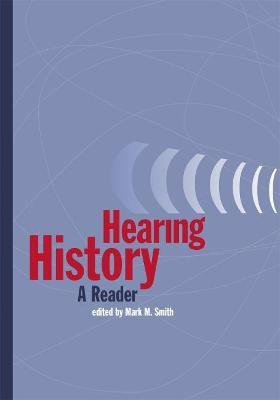
Hearing History(English, Paperback, Smith Mark M.)
- Smith Mark M.
Paperback & Hardcover deals ―
Amazon IndiaGOFlipkart ₹ 5123SnapdealGOSapnaOnlineGOJain Book AgencyGOBooks Wagon₹455Book ChorGOCrosswordGODC BooksGOe-book & Audiobook deals ―
Amazon India GOGoogle Play Books GOAudible GO* Price may vary from time to time.
* GO = We're not able to fetch the price (please check manually visiting the website).
Know about the book -
Hearing History(English, Paperback, Smith Mark M.) is written by Smith Mark M. and published by University of Georgia Press. It's available with International Standard Book Number or ISBN identification 082032583X (ISBN 10) and 9780820325835 (ISBN 13).
Hearing History is a long-needed introduction to the basic tenets of what is variously termed historical acoustemology, auditory culture, or aural history. Gathering twenty-one of the field's most important writings, this volume will deepen and broaden our understanding of changing perceptions of sound and hearing and the ongoing education of our senses. The essays stimulate thinking on key questions: What is aural history? Why has vision tended to triumph over hearing in historical accounts? How might we begin to reclaim the sounds of the past? With theoretical and practical essays on the history of sound and hearing in Europe and the United States, the book draws on historical approaches ranging from empiricism to postmodernism. Some essays show the historian of technology at work, others highlight how military, social, intellectual, and cultural historians have tackled historical acoustemologies. Investigating soundscapes that include a Puritan meetinghouse in colonial New England, the belfries of a French village at the close of the Old Regime, the court hall of Elizabeth I, and a Civil War battlefield, the essays vary just as widely in their topics, which include noise as a marker of social and cultural differences, the privileging of music as the sound of art, the persistence of Aristotelian ideas of sound into the seventeenth century, developments in sound related to medical practice, the advent of sound-recording technology, and noise pollution. This important new anthology will help us to contextualize the past within the larger rubric of all of the senses and thus free mainstream historical writing from the powerful but blinding focus on vision alone.
