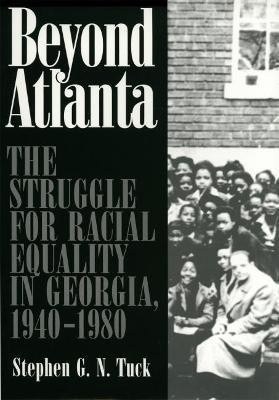
Beyond Atlanta(English, Paperback, Tuck Stephen G. N.)
- Tuck Stephen G. N.
Paperback & Hardcover deals ―
Amazon IndiaGOFlipkart ₹ 4345SnapdealGOSapnaOnlineGOJain Book AgencyGOBooks Wagon₹239Book ChorGOCrosswordGODC BooksGOe-book & Audiobook deals ―
Amazon India GOGoogle Play Books GOAudible GO* Price may vary from time to time.
* GO = We're not able to fetch the price (please check manually visiting the website).
Know about the book -
Beyond Atlanta(English, Paperback, Tuck Stephen G. N.) is written by Tuck Stephen G. N. and published by University of Georgia Press. It's available with International Standard Book Number or ISBN identification 0820325287 (ISBN 10) and 9780820325286 (ISBN 13).
This sweeping history of the civil rights movement in the South's largest state tells of many Georgias. On one extreme is Atlanta, a metropolitan center of relative black prosperity and training ground of many movement leaders. On another is Albany. A city deep in the "black belt" of the plantation South, it is the site of Martin Luther King Jr.'s greatest civil rights setback. Somewhere in between is yet another Georgia, a Georgia whose communities once constituted hundreds of Jim Crow fiefdoms. In places like "Bad" Baker County near the southern border, or in the relatively moderate town of Rome in the northern hills, black-white relations were as crude or as nuanced as the outlook of the local sheriff. Beyond Atlanta draws on interviews with almost two hundred people-black and white-who worked for, or actively resisted, the freedom movement. Among the topics Stephen Tuck covers are the absence of consistent support from the movement's national leadership and the frustration and innovation it alternately inspired at the local level. In addition, Tuck reveals friction, along urban-rural and poor-prosperous lines, about movement goals and tactics, and he highlights the often unheralded roles played by African American women, veterans, masons, unions, neighborhood clubs, and local NAACP branches. Tuck's narrative begins before, and continues after, the well-documented years of direct action protest in the 1960s. Though grounded in local and state matters, it is attuned to such national developments as World War II, the 1954 Brown decision, the Civil Rights Acts of 1964-65, and the growth of the Black Power movement. Perhaps most important, Beyond Atlanta makes clear the exorbitant cost of racial oppression, in terms of hampered economic and social progress, for all Georgians.
