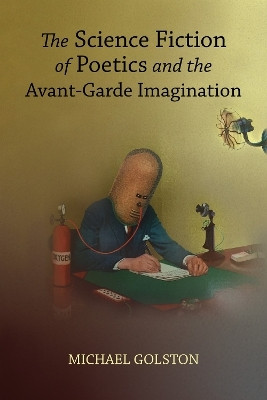
The Science Fiction of Poetics and the Avant-Garde Imagination(English, Paperback, Golston Michael)
- Golston Michael
Paperback & Hardcover deals ―
Amazon IndiaGOFlipkart ₹ 6134SnapdealGOSapnaOnlineGOJain Book AgencyGOBooks Wagon₹921Book ChorGOCrosswordGODC BooksGOe-book & Audiobook deals ―
Amazon India GOGoogle Play Books GOAudible GO* Price may vary from time to time.
* GO = We're not able to fetch the price (please check manually visiting the website).
Know about the book -
The Science Fiction of Poetics and the Avant-Garde Imagination(English, Paperback, Golston Michael) is written by Golston Michael and published by The University of Alabama Press. It's available with International Standard Book Number or ISBN identification 0817361006 (ISBN 10) and 9780817361006 (ISBN 13).
How the tropes of science fiction infuse and inform avant-garde poetics and many other kindred arts. This insightful, playful monograph from Golston does exactly what it advertises: modeling poetics based on how poetry (and some parallel artistic endeavors) has filtered through a century-plus of science fiction. This is not a book about science fiction in and of itself, but it is a book about the resonances of science-fiction tropes and ideas in poetic language. The germ of Golston's project is a throwaway line in Robert Smithson's Entropy and the New Monuments about how cinema supplanted nature as inspiration for many of his fellow artists: "The movies give a ritual pattern to the lives of many artists, and this induces a kind of 'low budget' mysticism, which keeps them in a perpetual trance." Golston charts how the demotic appeal of sci-fi, much like that of the B-movie, cross-pollinated into poetry and other branches of the avant garde. Golston creates what he calls a "regular Rube Goldberg machine" of a critical apparatus, drawing on Walter Benjamin, Roman Jakobson, and Gilles Deleuze. He starts by acknowledging that, per the important work of Darko Suvin to situate science fiction critically, the genre is premised on cognitive estrangement. But he is not interested in the specific nuts and bolts of science fiction as it exists but rather how science fiction has created a model not only for other poets but also for musicians and landscape artists. Golston's critical lens moves around quite a bit, but he begins with familiar enough subjects: Edgar Rice Burroughs, Mina Loy, William S. Burroughs. From there he moves into more "alien" terrain: Ed Dorn's long poem Gunslinger, the discombobulated work of Clark Coolidge. Sun Ra, Ornette Coleman, and Jimi Hendrix all come under consideration. The result of Golston's restless, rich scholarship is the first substantial monograph on science fiction and avant-garde poetics, using Russian Formalism, Frankfurt School dialectics, and Deleuzian theory to show how the avant-garde inherently follows the parameters of sci fi, in both theme and form.
